
⏱️ Estimated reading time: 16 min

Key Takeaways
Misophonia is a condition where specific sounds, typically biological ones like chewing, breathing, or snoring, trigger an intense emotional and physical reaction. At night, when background noise drops and the nervous system is primed to detect threat, even quiet trigger sounds can activate a full fight-or-flight response, making sleep onset nearly impossible.
A 2023 King’s College London study of 772 UK adults found that 18.4% of the general population experience misophonia causing significant burden. Yet only 13.6% of UK adults had heard the term at the time of the research.
The most common nighttime triggers are a partner’s breathing (affecting 83% of misophonia sufferers), snoring, throat clearing, lip-smacking, and rustling movements. In a quiet bedroom these sounds are amplified by contrast, making them far harder to ignore than the same sounds in a noisy daytime environment.
Yes, but the type of earplug matters. Misophonia sufferers need a filter, not a full block. A silicone earplug with a 24 dB SNR rating reduces low-frequency trigger sounds (breathing, snoring) while passing high-frequency sounds like alarm clocks and fire alarms, so you remain safe and responsive while sleeping.
The most practical combination is filtered earplugs plus a white noise machine or fan. Up to 85% of misophonia sufferers report some relief from ambient sound masking. Earplugs reduce the peak volume of trigger sounds; white noise raises the acoustic floor so the contrast between silence and trigger is less extreme.
It frequently does. People with misophonia describe the shared bedroom as creating an “eggshell dynamic”: the person with misophonia feels guilty for reacting, and their partner feels blamed for sounds they cannot control. Practical tools that allow both people to sleep in the same room reduce this tension without requiring bedroom separation.
If the sound of your partner breathing at night makes your chest tighten and your jaw clench, you already know what misophonia sleep disruption feels like. And you probably know it is not just “being sensitive.” A 2023 King’s College London study found that 18.4% of the UK general population experience misophonia causing significant burden in their lives, yet fewer than 14% of adults had even heard the term. That gap between how common this is and how little it is understood leaves a lot of people lying awake at 2am, unable to explain to their partner why a quiet exhale feels unbearable.
In communities where misophonia sufferers share coping strategies, one theme repeats: “It can be a relationship wrecker.” Separate bedrooms get discussed as a last resort. But there are practical, evidence-based tools that let two people share a bedroom without the relationship absorbing all the damage. This guide covers the science of why misophonia makes sleep harder, what happens in your nervous system when a trigger fires at night, and the specific tools that actually help.
What Is Misophonia and Is It Recognised in the UK?
Misophonia is a condition defined by an intense, automatic emotional reaction to specific trigger sounds, most commonly biological sounds like chewing, breathing, snoring, and throat clearing. Oxford Health NHS describes it as “an extreme emotional reaction to certain everyday sounds that most people would find relatively easy to ignore,” and lists sleep problems as one of its recognised behavioural impacts.
The reactions are not voluntary. When a trigger fires, the insula, anterior cingulate cortex, and autonomic nervous system activate together, producing a physical stress response that ranges from irritation and disgust to rage and panic. The Cleveland Clinic estimates that 1 in 5 people experience some form of misophonia, though severity varies considerably across that group.
Despite its prevalence, the King’s College London research found that only 13.6% of UK adults had heard the term. That awareness gap means many people living with misophonia have spent years believing they have an unusual character flaw rather than a documented neurological condition with researched interventions.
Why Does Misophonia Make Sleep So Much Harder at Night?
At night, the sympathetic nervous system (the fight-or-flight pathway) is far easier to activate than during the day, because the parasympathetic rest-and-digest state that precedes sleep is fragile. When a trigger sound fires during this window, the sympathetic system overrides the parasympathetic state, flooding the body with cortisol and adrenaline and pushing the brain out of the slow drift toward sleep onset. The harder you tried to relax before the trigger fired, the more disruptive the contrast becomes.
There is also an acoustic reason nighttime triggers feel worse. In a quiet bedroom, the signal-to-noise ratio of a trigger sound is extreme: a partner’s breathing at 30 dB against a 20 dB ambient room is a sharper contrast than the same sound in a 55 dB daytime environment. The brain detects the relative prominence of a sound, not just its absolute volume. The quieter the room, the more intrusive the trigger.
A 2025 peer-reviewed study published in PMC (PMC12882802, Wagner et al.) found that 30% of young people with misophonia showed clinically elevated sleep disturbance scores, defined as a t-score of 65 or above, compared to population norms. The effect size was d=1.22, which is large by clinical standards, and misophonia severity directly predicted sleep problem severity (β=0.19–0.24, p=0.017–0.049) across three separate sleep measures.
A 2024 study published via PubMed research on emotion dysregulation in misophonia found that emotion dysregulation is a core feature of misophonia, the intensity of the reaction to trigger sounds directly increases physiological arousal, making it harder to reach and maintain the relaxed state required for sleep onset.What Nighttime Sounds Trigger Misophonia Most Often?
The most prevalent nighttime trigger is a partner’s breathing. Misophonia systematic research confirms that 83% of misophonia participants reported breathing sounds as a trigger, making it the single most common stimulus category. Snoring is a closely related trigger that compounds the problem, because it is louder, more variable, and impossible for the partner to control consciously.
Other common nighttime triggers include throat clearing, lip-smacking, nose-sniffling, and rhythmic movement sounds like a partner turning over. The involuntary nature of these sounds is part of what makes the bedroom dynamic so fraught: the person producing the trigger cannot stop, and the person reacting cannot choose not to react.
Snoring is also the trigger most likely to escalate from irritation to full physiological arousal. It is loud enough to break light sleep entirely, not just delay onset. If you live with snoring partner sleep disruption combined with misophonia, the sensory load is compounding: the snoring is both a trigger sound and a sleep-fragmenting noise.
Does Misophonia Get Worse at Night?
For most people with misophonia, nighttime is the hardest period. Not because the condition itself worsens, but because three factors converge: the acoustic environment is quieter (making contrasts sharper), the nervous system is in a more reactive pre-sleep state, and the person cannot easily leave the trigger situation. In a daytime context you can walk out of a room. In a shared bedroom at 1am, the options feel far more limited.
Sleep deprivation also feeds back into misophonia severity. When you are underslept, amygdala reactivity increases and your prefrontal cortex’s ability to regulate emotional responses decreases. Triggers that might have registered as manageable after a good night feel genuinely intolerable after a poor one. This creates a cycle: misophonia disrupts sleep, which lowers the threshold for misophonia reactions the following night.
How Can You Manage Misophonia at Night? A Practical Strategy Overview
No single tool eliminates misophonia at night. The most effective approach combines acoustic management (earplugs and sound masking) with behavioural strategies that reduce the contrast and the emotional stakes of trigger exposure. The table below summarises the main approaches and their evidence base.
| Strategy | What It Does | Best For | Limitation |
|---|---|---|---|
| Filtered earplugs (24 dB SNR) | Reduces low-frequency trigger sounds while passing alarm and voice frequencies | Snoring, breathing triggers; suitable for anyone who needs to remain wake-able | Does not eliminate triggers entirely; reduces their volume and contrast |
| White noise machine or fan | Raises the ambient noise floor, reducing the acoustic contrast of trigger sounds | Light-sleeper misophonia sufferers, couples who want a shared tool | Up to 85% report some relief, though not universal. High volumes can disturb the non-misophonia partner |
| Sleep headphones / earphones | Plays masking audio (nature sounds, pink noise) while blocking external sounds | Users who find silence amplifies remaining trigger awareness | Comfort issues for side sleepers; battery life limits; can feel isolating |
| Cognitive Behavioural Therapy (CBT) | Reduces the automatic emotional response to triggers over time | Moderate to severe misophonia; long-term management | 48% showed significant improvement after 8 sessions; results are not guaranteed |
| Tinnitus Retraining Therapy (TRT) | Desensitises the auditory pathway to trigger sounds | People whose misophonia overlaps with tinnitus symptoms | Over 80% of participants improved in one study of 184 patients; still requires a specialist referral |
Many people in misophonia communities have settled on layering earplugs with ambient sound, playing beach waves or rainfall through a bedside speaker or phone all night. The earplugs reduce peak trigger volume; the ambient sound masks the residual sounds that earplugs alone do not fully cover. This combination addresses both the acoustic contrast problem and the psychological alertness that a very quiet room sustains.
What Kind of Earplugs Actually Help With Misophonia Sleep?
The critical distinction for misophonia is filtering versus blocking. Standard foam earplugs are designed to block as much sound as possible. They can muffle the trigger, but they also block your alarm clock, a baby monitor, or a fire alarm. A filtered silicone earplug with a 24 dB SNR rating reduces low-frequency sounds (snoring, breathing, traffic) while passing higher-frequency sounds, so you can wake to an alarm or respond to an emergency without removing the earplugs first.
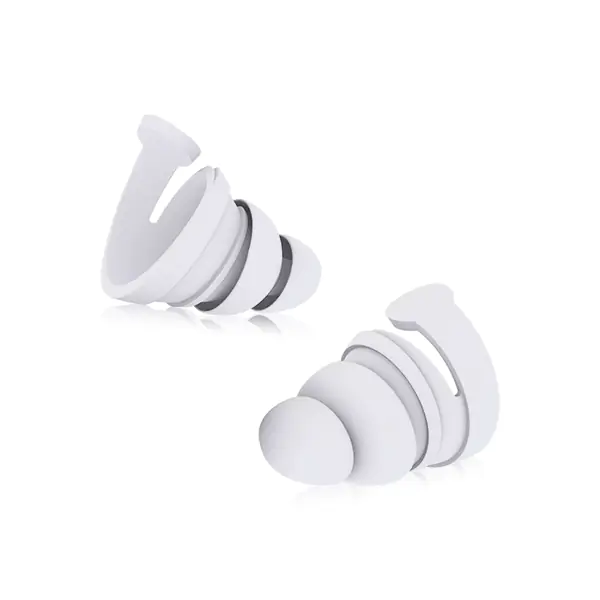
Material matters too. Foam earplugs compress into the ear canal, creating pressure over several hours that becomes uncomfortable enough to wake you. Silicone earplugs sit at the canal entrance with a two-lamella seal. They stay put through rolling over but do not press into the canal, which means they can be worn all night without discomfort. For misophonia sufferers who need consistent nightly use, disposable foam is impractical both physically and economically.
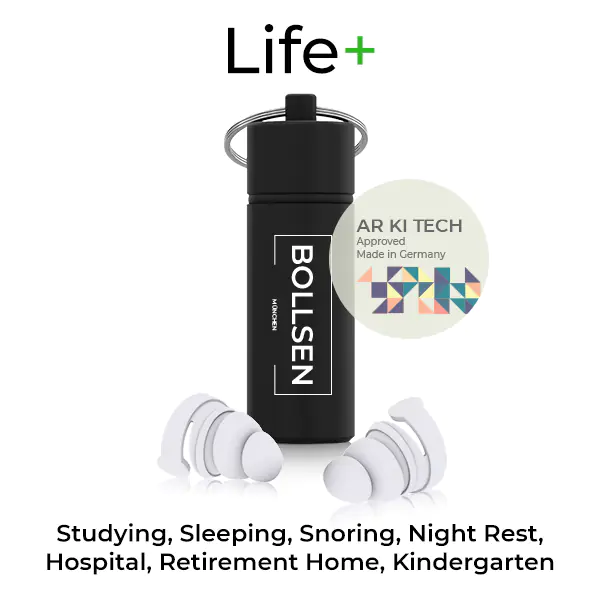
The Life+ earplug reduces low-frequency trigger sounds by 24 dB SNR while passing high-frequency sounds so alarms and voices stay audible, designed specifically for all-night wear.


For a full overview of earplug options by sleeping use case, the sleep earplugs buyer’s guide covers fit, SNR ratings, and material comparisons in detail.
One concern that sometimes comes up in misophonia communities is earplug dependency: “You may become unable to fall asleep without earplugs.” For a reusable medical-grade silicone earplug that costs under £27 and lasts up to 100 uses, this is a feature rather than a problem. Consistent acoustic protection is the goal, and a tool you reach for every night is one that is working.
For more on the broader category of earplugs for sleeping, including SNR comparisons, material guides, and how to choose for side sleeping versus back sleeping, the sleeping pillar covers all the variables that matter.
Trigger sounds for misophonia concentrate in the 200-4000 Hz range. NRR and SNR attenuation for misophonia trigger suppression during sleep targets this band without reducing the ambient background that prevents the total-silence amplification many misophonia sufferers report.Can Misophonia Destroy a Relationship When Sharing a Bedroom?
It can, and it does, but not inevitably. The pattern that escalates to real relationship damage is not the misophonia itself, but the dynamic that forms around it when there are no practical tools in place. The person with misophonia feels guilt about reacting to sounds their partner cannot help. The partner feels blamed, surveilled, or like they are sleeping next to someone who resents them. Bedroom separation becomes the first discussed solution, which adds physical distance to an already strained dynamic.
Practical shared-bedroom tools change this. When a white noise machine runs for both people and one partner sleeps in filtered earplugs, the trigger sounds do not disappear entirely, but they are reduced to a level that no longer activates a full physiological response. Both people sleep. The eggshell dynamic has less to feed on. This is not a cure for misophonia, but it is a way to stop the bedroom from becoming the central arena where the condition plays out every night.
If misophonia is affecting your sleep beyond what acoustic tools can address, see what safe earplug use for sleeping looks like in practice, and when to pursue a clinical referral.
When Should You Seek Professional Help for Misophonia?
Acoustic management helps with the nighttime trigger problem, but it does not address the underlying neurological response pattern. If misophonia is causing significant distress beyond the bedroom, affecting work, social situations, or your ability to be in shared spaces, a clinical referral is appropriate. CBT for misophonia outcomes show that 48% of patients demonstrated significant clinical improvement after 8 structured sessions. For cases where tinnitus co-occurs, tinnitus retraining therapy showed improvement in over 80% of 184 participants in one published study.
Your GP is the starting point. Explain the specific trigger pattern, that sounds rather than general noise cause a physiological reaction, and ask for a referral to an audiologist or psychologist experienced in hyperacusis or misophonia. The NHS acknowledges misophonia as a condition, so this is a reasonable referral request. For a full overview of earplugs for misophonia and how they fit into a broader management plan, the Bollsen misophonia resource covers the condition’s relationship with hearing protection in detail.
A 2024 PubMed prevalence study on misophonia in adults estimated that misophonia affects a significant proportion of the adult population but remains widely underdiagnosed, formal assessment is the first step toward accessing NHS-supported therapy options.
Hyperacusis and noise sensitivity share auditory hypersensitivity but differ in stimulus specificity and neural pathway. Noise sensitivity sleep and its clinical distinction from misophonia determines which management approach applies and why broadband attenuation helps one condition while worsening the other.Is Misophonia Different From General Noise Sensitivity?
Misophonia and noise sensitivity (hyperacusis) are related but distinct. Hyperacusis is a reduced tolerance for sound across a broad range of everyday sounds, primarily an auditory processing difference that responds to volume management. Misophonia is trigger-specific: the reaction is not to loudness but to the nature and source of the sound. A lawnmower at 85 dB might not bother someone with misophonia; a partner’s 30 dB breathing might trigger a full physiological response.
The distinction matters practically. Someone with hyperacusis benefits from broad noise reduction across all frequencies. Someone with misophonia benefits most from tools that specifically reduce the contrast of trigger sounds while preserving the acoustic environment enough to function, which is why a filtered earplug with a selective SNR rating is more useful than maximum-attenuation ear defenders.
Both conditions can co-occur, and both can worsen with sleep deprivation, which is why managing the nighttime environment effectively matters for both.
The NHS guidance on hyperacusis and sound sensitivity covers hyperacusis, the nearest NHS-recognised condition, which shares a sound-sensitivity mechanism but differs from misophonia in that it is triggered by volume rather than specific sound sources or contexts.What to Do Tonight If Misophonia Is Keeping You Awake
Misophonia sleep disruption has a physiological basis. The sympathetic nervous system activating in response to trigger sounds in a quiet bedroom is not something you can reason or will your way out of. But the right combination of tools can meaningfully reduce trigger volume, raise the acoustic floor, and break the cycle of poor sleep worsening sensitivity.
Start with the two lowest-barrier options: a white noise machine or fan running at bedside, and filtered earplugs that reduce low-frequency trigger sounds without blocking alarms. The Bollsen Life+ earplug filters trigger sounds by 24 dB SNR while passing high-frequency sounds so alarms remain audible.
If misophonia is disrupting more than sleep, a clinical referral for CBT is worth pursuing. 48% of patients improve significantly after 8 sessions. You do not have to choose between the bedroom and your relationship. You just need the right tools in the right combination.

His connection to hearing protection stems from personal experience with sound sensitivity during live events and work in noisy environments, an issue that made him more aware of the long-term risks of unmanaged noise exposure. Today, as both a communicator and a user of BOLLSEN products, he is passionate about raising awareness around the importance of proactive hearing care.
At BOLLSEN, he develops data-driven marketing campaigns, writes SEO-focused articles, and manages communication channels that connect customers with practical knowledge about hearing protection. His work ensures that BOLLSEN’s message—prioritizing health, performance, and sustainability reaches a global audience in an engaging and trustworthy way.
Passionate about writing since childhood, Timotej combines creativity with a strong analytical approach, continuously testing new ideas in digital marketing, performance advertising, and social media. He believes in learning through innovation and collaboration, balancing leadership with openness to new perspectives.
Beyond his professional role, Timotej is committed to a healthy lifestyle and finds inspiration in fitness, sports, and quality time with friends. His personal passion for well-being aligns with BOLLSEN’s core values, making his work not only a career but also a cause he deeply believes in.