
⏱️ Estimated reading time: 10 min

Key Takeaways
If you sing, earplugs for singers raise a question instrumentalists never have to ask, which is whether the plugs will mess with the one instrument you cannot put down. On the TalkBass forum, singers openly ask how to “sing in tune with earplugs,” so the worry is real and rarely answered well.
At Bollsen, we are a hearing protection company that makes medical-grade silicone earplugs tested and certified in Germany. We sell to musicians, but we are not going to repeat the claim plastered across every other singer guide. Most of those pages were written for “musicians” in general and skip the one thing that matters to a vocalist.
That thing is the occlusion effect, the boomy, hollow sound of your own voice once your ears are sealed. Understand it, and singing with plugs in stops feeling like a fight. This guide explains the science, the stage levels, and how to adapt, and it points you toward earplugs for music when you are ready to choose a pair.
Do singers really need earplugs on stage?
Most singers do need hearing protection, because a full band vocalist hears 95 to 105 dB at the stage monitor and live gigs commonly run 100 to 115 dB, both above the 85 dB level where sustained exposure starts causing cumulative, permanent hearing damage. Quieter acoustic singers sit lower, around 80 to 90 dB. The NHS guidance on noise-induced hearing loss sets that same 85 dB threshold for sustained risk.
The risk is not a one-night event, it builds over years of rehearsals and shows. The World Health Organization guidance on sound levels in music venues treats prolonged exposure above these levels as a genuine cause of noise-induced hearing loss and tinnitus. For a working vocalist, that is an occupational exposure, not a hobby risk.
Your exposure depends on what kind of singer you are, which decides how much you should turn the room down. The table below maps singer type to typical level and a sensible amount of attenuation.
| Singer type | Typical level | Main risk | Suggested approach |
|---|---|---|---|
| Acoustic / quieter solo singer | 80 to 90 dB | Long-term fatigue | Light, passive earplugs worn for longer sets |
| Choir / ensemble vocalist | 85 to 95 dB | Cumulative exposure | Passive earplugs around 24 dB SNR |
| Electric / full-band vocalist | 95 to 105 dB at the monitor | Noise-induced hearing loss | Passive earplugs, or in-ear monitors if touring |
| Festival / large-stage vocalist | 100 to 115 dB | Damage plus tinnitus | Higher attenuation, in-ear monitors for the mix |
Why does my own voice sound hollow with earplugs in?
Your voice sounds hollow because of the occlusion effect, where sealing the ear canal traps bone-conducted vibration from your own voice and amplifies low frequencies around 200 to 400 Hz, the band that makes speech and singing sound boomy. People describe it as talking into a barrel.
When your ears are open, those low vibrations travelling through your skull and soft tissue escape down the ear canal. Seal the canal and they bounce back against the eardrum, so the low end of your own voice gets louder relative to everything else. The effect is strongest with deep, dense plugs that block the canal completely.
This is exactly the distortion musicians fear, the worry that the wrong plugs change how they hear the music, and the fear is fair because the wrong plugs can create that effect. A vented passive silicone design reduces the occlusion effect compared with dense foam, though no earplug removes it entirely. To go deeper on the filtering side, see how acoustic filters reduce the occlusion effect and shape what reaches your ear.
Can you sing in tune with earplugs in?
Yes, you can sing in tune with earplugs in, and the evidence is reassuring. A University of Kentucky study on earplugs and pitch perception of 72 music majors found choral and solo singers did not sing significantly more or less in tune with earplugs in, and the accuracy differences that did appear were too small to perceive.
The study did rank plug types. Pitch accuracy was highest with no earplugs, then with hi-fi style plugs, then with foam, so foam was the worst of the three and the high-fidelity option was nearly indistinguishable from bare ears. Dense foam dulls the highs you use to find pitch, which is why it sits at the bottom.

There is a surprising upside here. Some singers say plugs make it “much easier to sing in key, like holding one ear so the sound vibrates in the skull,” because the occlusion effect feeds your own voice back through bone conduction. The vibration that booms when you talk can become a built-in pitch reference when you sing.
How do you get used to singing with earplugs?
You get used to singing with earplugs by rehearsing with them in well before the gig, because your brain needs a short adjustment period to recalibrate the balance between bone-conducted and air-conducted sound. Most singers settle within a few practice sessions rather than weeks.
Start at rehearsal volume, sing material you know cold, and let your ears relearn where your pitch sits. The first few minutes feel odd because your voice is louder in your head and the room is quieter, but that contrast fades as your monitoring adapts. Insert the plugs before the stage gets loud, not halfway through the set, so your reference stays consistent.
If you want the plugs to seal correctly without sitting too deep, which worsens occlusion, fit accuracy matters. Bollsen’s AR KI TECH uses two photos of your ears to recommend the right size, so the seal is consistent every time you sing.
Are earplugs or in-ear monitors better for vocalists?
Earplugs and in-ear monitors solve different problems. Passive earplugs lower the entire stage by a fixed amount so you hear the same balance, just safer, while in-ear monitors replace the wedge with a custom mix fed to your ears, which needs a desk, a sound engineer, and a bigger budget.
For most singers below the professional touring level, passive earplugs are the practical answer. They need no setup, work on any stage, and protect your hearing the moment you put them in. In-ear monitors are the better tool once you need precise control of your own vocal level in the mix and have the crew to run them.
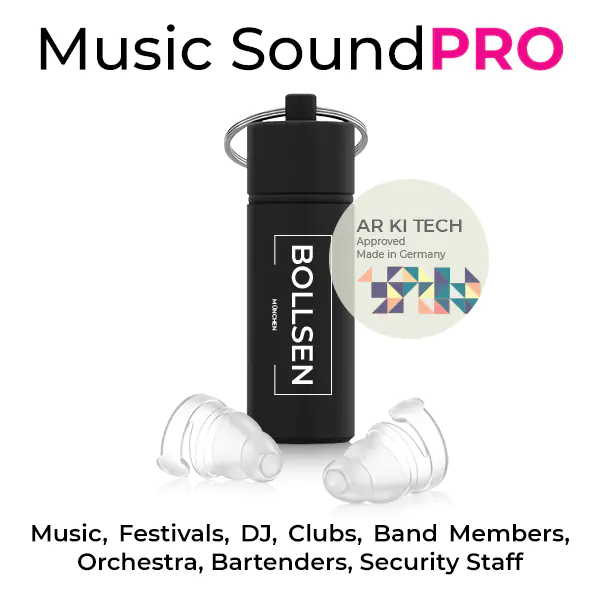
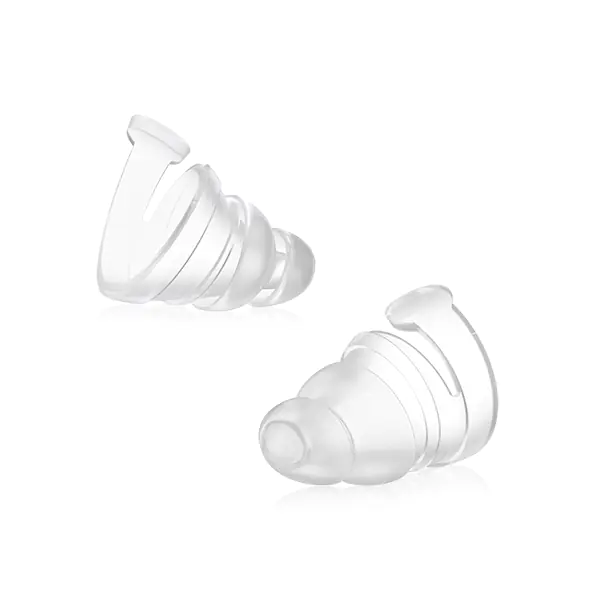
Our Music SoundPRO earplugs for vocalists are 2-lamella medical-grade silicone rated at SNR 24 dB, which reduces a loud stage to a safer level while you still clearly hear yourself and the monitor. They are passive, so they cut the volume rather than promising every frequency reaches you unchanged. For a fuller buyer comparison, see the best earplugs for musicians across stage and audience use.
So where does this leave you as a singer? Earplugs do not have to wreck your pitch. The occlusion effect is known and manageable, and a vented passive silicone plug, rehearsed in advance, protects your hearing without costing you your sense of tune. Match the level to how loud you actually sing, practise with them in, and treat your ears as the instrument they are. Look after them once and you keep singing for decades.



His connection to hearing protection stems from personal experience with sound sensitivity during live events and work in noisy environments, an issue that made him more aware of the long-term risks of unmanaged noise exposure. Today, as both a communicator and a user of BOLLSEN products, he is passionate about raising awareness around the importance of proactive hearing care.
At BOLLSEN, he develops data-driven marketing campaigns, writes SEO-focused articles, and manages communication channels that connect customers with practical knowledge about hearing protection. His work ensures that BOLLSEN’s message—prioritizing health, performance, and sustainability reaches a global audience in an engaging and trustworthy way.
Passionate about writing since childhood, Timotej combines creativity with a strong analytical approach, continuously testing new ideas in digital marketing, performance advertising, and social media. He believes in learning through innovation and collaboration, balancing leadership with openness to new perspectives.
Beyond his professional role, Timotej is committed to a healthy lifestyle and finds inspiration in fitness, sports, and quality time with friends. His personal passion for well-being aligns with BOLLSEN’s core values, making his work not only a career but also a cause he deeply believes in.