
⏱️ Estimated reading time: 11 min

Key Takeaways
You got home from the gig hours ago, the lights are off, and there it is: a thin, high-pitched ringing that will not switch off. So can concerts cause tinnitus, or is this just what ears do after a loud night? The short answer is yes, concerts can cause tinnitus, and that ringing is your inner ear telling you it took a hit.
The reassuring part is that after one gig, for most people, it settles. At Bollsen we make certified, reusable earplugs and have helped over 1,000,000 people protect their hearing without missing the music, so we spend a lot of time talking people down from exactly this 2am panic.
Scroll through r/tinnitus the morning after any festival and the same post repeats: “my ears are still ringing, did I permanently damage my hearing?” The community answer barely changes, give it time and protect what you have left. This guide covers why the ringing happens, how long it lasts, when it is a genuine warning sign, and how a proper pair of earplugs for music stops it happening next time.
Can concerts cause tinnitus?
Yes, concerts can cause tinnitus, because the 100 to 105 dB(A) sound levels at a typical rock or pop gig overwhelm the tiny hair cells inside your cochlea, and those cells respond by firing a phantom ringing known as noise-induced tinnitus. It is extremely common.
In one review of leisure noise, transient tinnitus was reported by 85% of rock concert audiences and 88% of nightclub visitors straight after the event. So if your ears are ringing after a show, you are firmly in the majority, not the exception.
The ringing is a symptom, not the injury itself. It signals that the sound was loud enough and long enough to stress the hearing system, which is the same warning sign whether it fades by morning or lingers.
Why are my ears ringing after a concert?
Your ears ring after a concert because loud sound bends and exhausts the stereocilia, the microscopic hair bundles on the sensory cells of the inner ear, causing them to misfire and send a ringing signal to the brain even in silence. This overload is called a temporary threshold shift.
A temporary threshold shift is a short-term drop in hearing sensitivity after loud noise. Studies measured an average 10 dB shift at 3 to 6 kHz in concertgoers who did not wear protection, which is why voices sound muffled and everything feels underwater for a while after a gig.
The Cleveland Clinic notes that these hair cells do not grow back once they are destroyed. A temporary shift is your ears recovering. Repeated shifts are how that recovery slowly stops being complete.
How long does tinnitus last after a concert?
Tinnitus after a concert usually lasts from a few hours up to 24 to 72 hours, fading as the hair cells recover from the temporary threshold shift. Clinicians class post-noise tinnitus as temporary if it resolves within roughly 30 days.
According to Medical News Today, ringing from a loud event typically settles within a few hours to a day or so. Sleep, quiet, and staying away from more loud noise all help your ears reset faster.
Regulars on tinnitus forums have a piece of advice worth repeating here: stop doomscrolling and hyper-focusing on the sound. Anxiety and constant checking make the ringing feel louder, which slows the mental recovery even after your ears are fine.
Can one concert cause permanent tinnitus?
One concert can cause permanent tinnitus, but it is uncommon, and permanent tinnitus is far more strongly linked to repeated unprotected exposure over months and years. The prevalence tells the story: 76% of professional DJs and 26% of rock and pop musicians report chronic tinnitus.

Part of the danger is invisible. Standard hearing tests can miss so-called hidden hearing loss, where up to 30 to 40% of outer hair cells and 50 to 80% of inner hair cell nerve fibres are already gone before an audiogram shows anything. That is how noise-induced hearing loss from concert exposure builds silently across a gig-going lifetime.
If you are a regular gig-goer wondering how live music causes tinnitus over the long term, the pattern is cumulative dose. And if you already live with ringing between shows, our guidance on earplugs for tinnitus covers managing the condition and protecting the hearing you have left.
How loud is a concert, and why does that cause ringing?
A concert is loud enough to cause ringing because it runs well past the 85 dB level where hearing damage begins. Rock and pop shows sit at 95 to 107 dB(A), and the front of a festival main stage can hit 110 to 120 dB, deep into damage territory.
Safe exposure works on a sliding scale. The reference is 85 dB for 8 hours, and every 3 dB louder halves the safe time. That means a two-hour concert at 100 dB delivers roughly 15 times the safe daily noise dose in a single night.
| Sound source | Typical level | Safe exposure before risk |
|---|---|---|
| Everyday conversation | ~60 dB(A) | No limit |
| Busy nightclub | ~95 dB(A) | ~45 minutes |
| Rock or pop concert | 100–105 dB(A) | ~5–15 minutes |
| Festival main stage / front row | 110–120 dB(A) | Under 2 minutes |
| Same concert with Music SoundPRO (SNR 24 dB) | ~81 dB(A) | Below the 85 dB damage threshold |
The numbers explain why one night feels so punishing to your ears. For a fuller breakdown of stage, pit, and crowd readings, see our data on how loud concerts are in decibels and where the real risk zones sit at a live show.
When should I see a doctor about ringing in my ears?
See a doctor if ringing after a concert does not settle within a few days, keeps returning, gets louder or sharper, becomes constant, or comes with muffled hearing or ear pain. As a rule of thumb, ringing that persists past about 48 hours to 4 days warrants a check.
The NHS advises seeing a GP when tinnitus is regular, constant, or worsening, or when it affects your sleep and daily life. Treat one urgent sign as a red flag: if the ringing pulses in time with your heartbeat, get it looked at promptly.
Most post-gig ringing never reaches that stage. But knowing the line between normal recovery and a genuine warning takes the anxiety out of the wait, and it means you act quickly on the rare occasion it matters.
How can I prevent tinnitus at concerts and festivals?
You prevent tinnitus at concerts by lowering the noise dose reaching your ears, and the simplest way to do that is certified earplugs rated at SNR 24 dB. Bringing a 105 dB show down to around 81 dB keeps you under the 85 dB damage threshold for the whole night.
This is the honest version, not a marketing one. A passive silicone earplug turns the entire concert down, so you still hear the music clearly, just quieter. It does not leave the sound untouched, and that is fine, because the goal is a safer volume, not a perfectly unchanged one.
The most common objection we hear is the r/tinnitus regret, “I wish I’d worn earplugs,” paired with the fear that plugs will ruin the gig or muffle everything. Reusable concert plugs answer both: you still feel the bass and hear the vocals, at a level your ears can handle for hours.
Our Music SoundPRO concert earplugs use passive 2-lamella silicone rated at SNR 24 dB, and the transparent design is invisible once it is in. Correct fit is what delivers the rated protection, so seating each plug properly matters more than the number on the box.


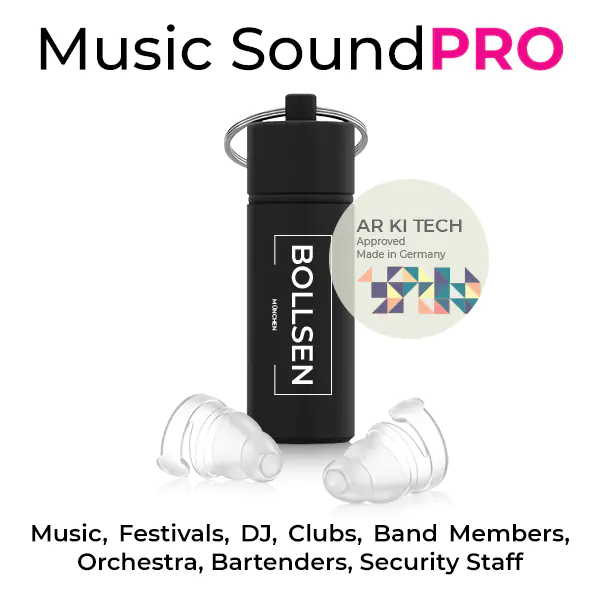
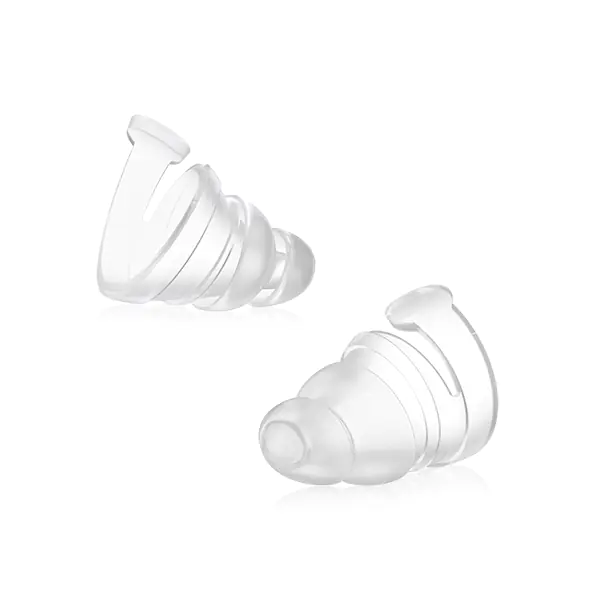
Concert earplugs range from cheap foam to reusable high-fidelity designs, and they are not all equal for live music. If you want to compare them, our roundup of the best high-fidelity earplugs for concerts walks through what to look for before your next show or festival.
If you have ever struggled to get a good seal, our AR KI TECH ear-measurement service uses two photos to match you to the right size, which is what turns the rated 24 dB into real-world protection at the gig.
So, can concerts cause tinnitus? Yes, and the ringing you hear afterwards is a real signal from your inner ear, not something to ignore. For most people, after one gig, it is a temporary threshold shift that fades within a day or two with rest and quiet.
Watch the timeline and see a GP if it lingers past a few days, grows louder, or turns constant. The single change that keeps you off r/tinnitus at 2am is protecting your hearing before the next show, because these hair cells do not grow back. Wear the plugs, keep the music, and protect what you have left.

His connection to hearing protection stems from personal experience with sound sensitivity during live events and work in noisy environments, an issue that made him more aware of the long-term risks of unmanaged noise exposure. Today, as both a communicator and a user of BOLLSEN products, he is passionate about raising awareness around the importance of proactive hearing care.
At BOLLSEN, he develops data-driven marketing campaigns, writes SEO-focused articles, and manages communication channels that connect customers with practical knowledge about hearing protection. His work ensures that BOLLSEN’s message—prioritizing health, performance, and sustainability reaches a global audience in an engaging and trustworthy way.
Passionate about writing since childhood, Timotej combines creativity with a strong analytical approach, continuously testing new ideas in digital marketing, performance advertising, and social media. He believes in learning through innovation and collaboration, balancing leadership with openness to new perspectives.
Beyond his professional role, Timotej is committed to a healthy lifestyle and finds inspiration in fitness, sports, and quality time with friends. His personal passion for well-being aligns with BOLLSEN’s core values, making his work not only a career but also a cause he deeply believes in.