
 Sleeping
 Concerts
 Motorcycle
 Swimming
 Work
Work Kids
Kids


⏱️ Estimated reading time: 12 min

Key Takeaways
What does a hearing acoustician actually look for when they recommend an earplug? Not the biggest number on the box, according to the people who fit ears for a living. They look for something certified, comfortable enough to keep in for hours, and simple enough that people will actually use it. That is why we asked a team of German hearing acousticians who have tested our earplugs in the field, at a festival, and later chose to sell them under their own logo.
We are BOLLSEN, a European hearing protection brand, and our reusable earplugs are certified to EN 352-2. BOLLSEN works with Camino Akustik as a partner. This article brings together what their team said in their own words, what they look for in hearing protection, and what that means if you are choosing earplugs for sleep, music or a noisy job. Our sister piece with a TOP-100 hearing specialist from Bielefeld covers the same question from another practice’s point of view.
Who are Camino Akustik, and why does a hearing acoustician’s view matter?
Camino Akustik GmbH is an independent hearing acoustics practice in Elsenfeld, Bavaria, run by hearing acousticians Tanja Rhein and Michael Klein. In Germany, a Hörakustiker works in a recognised skilled trade: testing hearing, fitting hearing aids and making ear protection, close to the role of a hearing aid audiologist in the UK. You can find the practice at camino-akustik.de.
A hearing acoustician’s view matters because they deal with the consequences of noise every day. They see the people who wish they had protected their ears earlier, and they know which products customers bring back because they hurt, fall out or are too fiddly. When a practice like this recommends an earplug, it is putting its local reputation on the line in a way an advert never does.
What did Camino Akustik say after testing BOLLSEN at a festival?
In August 2024 the Camino Akustik team took BOLLSEN earplugs to the Hoodstock festival to see how they held up in a real crowd, with real volume and hours of wear. Their verdict, posted on their own Instagram reel, was short:
“Test clearly passed!”
Camino Akustik on Instagram, August 2024 (translated from German)
In a second post from the same festival, they explained why they were happy to recommend the earplugs to festival-goers:
“With hearing protection from @bollsen_earplugs you protect your ears and can relax and give yourselves over to the music! Super comfortable fit …”
Camino Akustik on Instagram, August 2024 (translated from German)
Comfort comes up first for a reason. An earplug only protects you while it is in your ear, and festival protection that hurts after an hour comes out long before the headline act. If you are wondering whether protection is worth it at all at a gig, our guide to whether earplugs at concerts work goes through the evidence, and the band Dubioza Kolektiv share their touring view in their expert review on concert earplugs.
Why did Camino Akustik put their own logo on our earplugs?
After the festival test, Camino Akustik went a step further: they put their own logo on our certified earplugs, available from a single set, so their customers can take home protection carrying the name of the practice they trust.
For a hearing acoustician, putting your name on a product is a stronger signal than any quote. Every customer who takes a pair home associates the practice with how well those earplugs fit, how long they last and whether they actually get used. We shared the result on our Instagram in June 2026:
What makes an earplug comfortable enough to keep in?
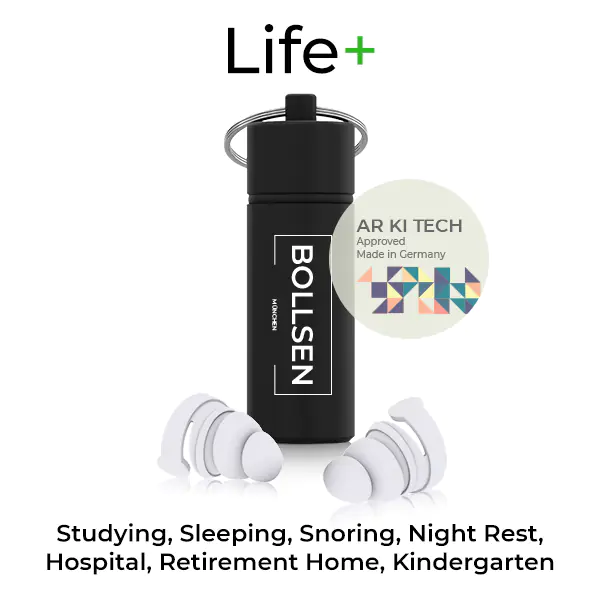
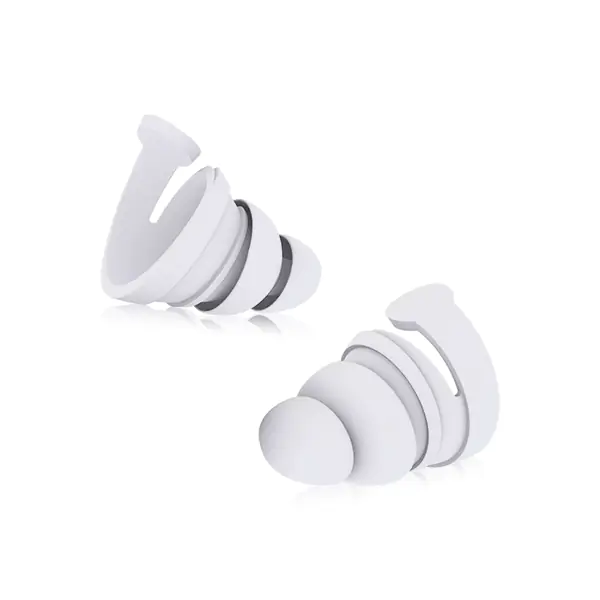
A good earplug should not press or distract you. Soft materials and a shape that suits the ear canal make the biggest difference. Life+ is made from soft, hypoallergenic silicone that is BPA-free, latex-free and PVC-free, and it sits low and flush in the ear with no protruding stem. That matters most at night: it is designed so the earplug does not press against the pillow when you sleep on your side.
The patented conical shape uses two lamellae to seal the ear canal, rather than relying on foam that expands and pushes outwards against the canal walls. Ears vary a lot, so size matters as much as material. If you are unsure which size suits you, Life+ is also available with AI ear measurement from two photos, which matches you to the right size before your pair is sent. For more on choosing protection for sleep, see our guide to earplugs for sleeping.
How loud is too loud, at work and at leisure?
Noise does its damage through level and time together. In the UK, the Control of Noise at Work Regulations 2005 set two action levels for daily or weekly average exposure. At 80 dB(A) employers must assess the risk and provide information and training. At 85 dB(A) they must provide hearing protection and set up hearing protection zones, with an exposure limit of 87 dB(A) taking account of the protection worn.
Leisure noise has no such rules, but the risk is the same. The World Health Organization estimates that over 1 billion young adults are at risk of permanent, avoidable hearing loss because of unsafe listening, and lists exposure to loud sounds among the most common preventable causes of hearing loss in adults. Concerts, festivals, clubs, power tools and motorsport all count, which is why hearing acousticians recommend reducing your exposure before any ringing starts.
That is also why certification matters. Life+ is tested to the European standard for earplugs, EN 352-2, carries the CE mark and is rated SNR 24 dB. Its attenuation rises with frequency, from around 22 dB in the low frequencies to about 35 dB at 8 kHz, so it works hardest on the sharp, high-pitched end of loud sound. You still hear what is around you, just quieter. Our guide to how much hearing protection you need helps match a rating to a noise level. If you notice ringing in your ears that does not go away, speak to your GP; the NHS guidance on tinnitus explains what to expect.
Which type of earplug should you choose?
There are four common types of earplug, and the right one depends on what you need: quiet for sleep, protection at work, or a more comfortable night at a gig. Here is how they compare:
| Earplug type | Advantages | Disadvantages |
|---|---|---|
| Foam earplugs | Very cheap; high rated attenuation when rolled and seated correctly; a fresh pair every time | Single use, so lots of waste; expand in the canal and can feel like pressure; protection varies with every insertion |
| Wax earplugs | Mouldable over the entrance of the ear; many side sleepers find them comfortable | Usually only a few uses; soften in warmth, so they can lose their hold; protection depends on how well they are moulded |
| Reusable silicone earplugs (BOLLSEN Life+) | Reusable up to 100 times; soft, flexible and low-profile; SNR 24 dB, rising in the high frequencies; washable, with a carry case | Cost more up front than foam; need regular cleaning; the right size matters for a good seal |
| Custom-moulded earplugs | Made from an impression of your own ear; very long-lasting | Considerably more expensive; need an appointment and a wait while they are made; need regular cleaning |
Whatever you choose, look for certification first (EN 352 and the CE mark for any protection used at work) and then for a fit that is snug without hurting. If you are unsure, a local hearing acoustician or audiologist can help you choose, or make custom protection if you need it.
How do you insert, clean and store reusable earplugs?
Correct insertion matters as much as the earplug itself. Wash your hands first. Gently pull the top of your ear up and back with your free hand to straighten the canal, then ease the silicone earplug in with a slight twist until it seals. It should feel snug, not painful, and it should not be pushed deep into the ear.
Choosing reusable earplugs means lower long-term cost and far less waste. Rinse Life+ in water with a little mild soap, let them dry completely, and keep them in the aluminium travel case with keyring that comes with every pair. Avoid harsh chemicals. Looked after this way, a pair lasts up to 100 uses; replace them sooner if the silicone cracks or the seal no longer feels secure. If you also use earplugs for music, our hub on earplugs for music covers gigs, festivals and playing live.


Where to find Camino Akustik
Camino Akustik is a hearing acoustics practice in Elsenfeld, Bavaria, Germany. For appointments, questions about hearing protection or personal advice, visit their website: camino-akustik.de.
Sources
- HSE: The Control of Noise at Work Regulations 2005
- legislation.gov.uk: The Control of Noise at Work Regulations 2005 (SI 2005/1643)
- World Health Organization: Deafness and hearing loss fact sheet
- NHS: Tinnitus
- Camino Akustik on Instagram: Hoodstock festival test (August 2024)
- Camino Akustik on Instagram: Hoodstock festival post (August 2024)
- BOLLSEN on Instagram: Camino Akustik co-branded earplugs (June 2026)

His connection to hearing protection stems from personal experience with sound sensitivity during live events and work in noisy environments, an issue that made him more aware of the long-term risks of unmanaged noise exposure. Today, as both a communicator and a user of BOLLSEN products, he is passionate about raising awareness around the importance of proactive hearing care.
At BOLLSEN, he develops data-driven marketing campaigns, writes SEO-focused articles, and manages communication channels that connect customers with practical knowledge about hearing protection. His work ensures that BOLLSEN’s message—prioritizing health, performance, and sustainability reaches a global audience in an engaging and trustworthy way.
Passionate about writing since childhood, Timotej combines creativity with a strong analytical approach, continuously testing new ideas in digital marketing, performance advertising, and social media. He believes in learning through innovation and collaboration, balancing leadership with openness to new perspectives.
Beyond his professional role, Timotej is committed to a healthy lifestyle and finds inspiration in fitness, sports, and quality time with friends. His personal passion for well-being aligns with BOLLSEN’s core values, making his work not only a career but also a cause he deeply believes in.