
⏱️ Estimated reading time: 14 min

Key Takeaways
The best-fit earplugs are defined by how well they match the shape of your ear canal. Brand, material, and price matter less than whether the earplug forms a stable seal that feels comfortable and reduces noise consistently.
Earplugs fit correctly when they feel comfortable, stay in place during movement or sleep, and reduce noise evenly in both ears. You should not feel pain, strong pressure, or the need to constantly adjust them.
Guessing earplug size based on averages or past experience often leads to inconsistent results. Small differences in ear canal shape can change how an earplug feels and performs.
Pain, soreness, looseness, earplugs falling out, or uneven noise reduction are common signs of a poor fit. These issues usually mean the earplug size or shape does not match your ear canal.
AR KI TECH uses ear images to estimate ear canal size and suggest an appropriate earplug size before purchase. This helps you start with a better fit and reduces the need for trial and error.
What Does “Best Fit” Actually Mean When It Comes to Earplugs?
Best‑fit earplugs are not defined by brand, material, or price they are defined by how accurately an earplug matches the unique shape of your ear canal to create a stable seal, real comfort, and reliable noise reduction.
When people search for the best‑fit earplugs, they are rarely looking for a specific brand or material. What they actually want is an earplug that feels comfortable, stays in place, and blocks sound effectively without causing pressure or pain. In practice, “best fit” is not a subjective preference, it is the result of how well an earplug matches the unique anatomy of your ears.
A well‑fitting earplug creates a reliable seal at the entrance of the ear canal. This seal is what allows the earplug to reduce noise as intended, distribute pressure evenly, and remain stable during movement or sleep. Without this seal, even earplugs with high noise‑reduction ratings cannot perform as expected.
Why ear canal shape matters more than earplug brand
Ear canal shape is the primary factor that determines whether an earplug will fit correctly, form a proper seal, and deliver consistent noise reduction.
Every ear canal is different. Some are narrow, others wider; some are straighter, others curved; and depth can vary significantly from person to person. These differences determine how an earplug sits in the ear and whether it can form a proper seal.
Because of this variation, the same earplug can feel perfect for one person and completely unusable for another. Brand reputation or price does not change the underlying fact that ear canal geometry plays the decisive role. If the shape or size of an earplug does not align with your ear canal, it may feel loose, create pressure points, or fail to block noise evenly.
This is also why many people experience earplugs falling out during the night or needing constant adjustment. In most cases, the issue is not the material or the quality of the product, but a mismatch between the earplug’s dimensions and the wearer’s ear anatomy.
How a proper seal affects comfort, stability, and noise reduction
A correct earplug seal is the clearest signal that an earplug fits your ear canal properly and can deliver real comfort, stability, and effective noise reduction.
The seal is the central indicator of correct fit. When an earplug seals the ear canal properly, three things happen at once:
First, comfort improves. A correct seal distributes contact evenly instead of concentrating pressure on one sensitive area. This is especially important for side sleepers or for people wearing earplugs for several hours.
Second, stability increases. Earplugs that fit well stay in place during movement, sleep, or jaw motion. They do not slowly work their way out of the ear, and they do not require frequent readjustment.
Third, noise reduction becomes consistent. Sound travels through gaps. Even a small gap between the earplug and the ear canal can significantly reduce real‑world attenuation. A proper seal allows the earplug to perform close to its intended noise‑reduction potential, rather than delivering unpredictable results.
Why “one‑size‑fits‑all” often fails in real‑world use
One‑size‑fits‑all earplugs fail because a single earplug size cannot adapt to the wide variation in ear canal anatomy, seal quality, and comfort needs.
“One‑size‑fits‑all” earplugs are designed around averages. They assume a standard ear canal diameter and shape that, in reality, only fits a portion of users. For many people, this leads to compromise rather than true fit.
If an earplug is slightly too large, it may cause pressure, soreness, or pain after short periods of use. If it is slightly too small, it may feel comfortable at first but loosen over time and lose its seal. In both cases, the user experiences reduced comfort and inconsistent noise reduction.
…starts with understanding ear canal anatomy. Silicone, wax, and foam seal performance compared by type is the next variable, since each material creates different seal characteristics under sustained compression.
Knowing safe noise exposure limits helps you understand why a proper earplug seal is essential, an ill-fitting earplug leaves gaps that let damaging sound frequencies pass through.
How Can You Tell If Earplugs Truly Fit Your Ears Correctly?
Correctly fitting earplugs can be identified by how an earplug feels inside the ear canal, how securely it stays in place, and how consistently it delivers noise reduction without discomfort.
While fit is influenced by anatomy, it can be evaluated through clear physical signals. You do not need professional equipment to notice whether an earplug fits properly, but you do need to know what to pay attention to. The body provides reliable feedback when an earplug works as intended.
Signs that earplugs fit well (comfort, stability, balanced pressure)
Well‑fitting earplugs feel neutral inside the ear canal, maintain a stable seal, and reduce noise evenly without drawing attention to themselves.
A proper fit is often described as “forgetting they are there.” The earplugs should not create sharp pressure points, pulsing sensations, or soreness, even after extended use. Instead, pressure feels evenly distributed, allowing the ear canal to relax rather than resist the earplug.
Stability is another key indicator. Earplugs that fit correctly stay in place during normal movement, speaking, chewing, or sleeping. They do not loosen gradually or require frequent repositioning. This stability is a direct result of correct sizing and proper interaction with the ear canal walls.
Noise reduction should also feel balanced. Sounds become quieter overall, rather than muffled on one side or inconsistent with head movement. This consistency signals that the earplug maintains its seal throughout normal activity.
Warning signs of a poor fit (pain, loosening, uneven noise blocking)
Poorly fitting earplugs reveal themselves quickly through discomfort, seal loss, and unpredictable noise reduction.
Pain or soreness within minutes of insertion usually indicates that the earplug is too large or presses against sensitive areas of the ear canal. On the other hand, earplugs that feel loose, fall out, or slowly work their way out of the ear are often too small or mismatched to the canal shape.
Uneven noise reduction is another common warning sign. If one ear feels quieter than the other, or if sound levels change noticeably when you move your jaw or head, the seal is likely incomplete. These gaps allow sound to bypass the earplug, reducing its real‑world effectiveness.
Why perceived noise reduction can be misleading without proper fit
Perceived noise reduction does not always reflect actual earplug performance, especially when the fit is compromised.
Many earplugs initially seem effective because they reduce high‑frequency sounds or create a sensation of isolation. However, without a proper seal, lower‑frequency noise can still travel through gaps in the ear canal. Over time, this leads to inconsistent protection and a false sense of effectiveness.
This is why two people wearing the same earplugs can experience very different results. Noise‑reduction ratings assume optimal fit, but real‑world performance depends on how accurately the earplug matches the individual ear. Evaluating fit through comfort, stability, and consistency is therefore essential before relying on any stated attenuation values.
Under the HSE Noise at Work Regulations, employers are required to verify that hearing protection is correctly fitted and providing adequate attenuation, a standard of fit verification that applies equally to sleep use, where an inadequate seal means noise passes around the earplug.
What Is the Most Reliable Way to Find Earplugs That Fit Your Unique Ears?
The most reliable way to find best‑fit earplugs is to match an earplug’s size and shape to your individual ear canal anatomy using objective measurement rather than trial and error.
Because ear canals vary so widely, guessing based on averages, recommendations, or previous experiences often leads to inconsistent results. A method that takes individual anatomy into account from the start significantly increases the chance of achieving a comfortable, stable, and effective fit.
Why ear size and geometry cannot be accurately guessed
Ear canal geometry varies in diameter, length, curvature, and entry angle, making visual estimation or assumption‑based sizing unreliable.
Two people with similar external ear appearance can have very different ear canal dimensions. This means that relying on general descriptors such as “small ears” or “large ears” rarely translates into an accurate earplug fit. Even personal experience with past earplugs can be misleading, as a slightly different shape or insertion depth can change how an earplug performs.
This variability explains why many users try multiple sizes or models before finding something that works. Without measurement, the process depends on approximation rather than precision.
How measurement‑based fitting improves comfort and consistency
Measurement‑based earplug fitting improves comfort and performance by aligning the earplug size with the actual dimensions of the ear canal.
When ear canal size and shape are accounted for, pressure is distributed more evenly and the earplug can form a stable seal without forcing itself into sensitive areas. This reduces discomfort during long‑term use and helps the earplug remain in place during movement or sleep.
Consistency also improves. An earplug that fits correctly from the start performs predictably across different situations, rather than feeling effective one day and inadequate the next. Measurement removes much of the variability that comes from guessing or relying on generic sizing.
AR KI TECH ear measurement: a practical way to start with the right fit
AR KI TECH ear measurement is a simple method that uses augmented reality and artificial intelligence to help choose the right earplug size before you buy.
Instead of guessing or trying many different earplugs, AR KI TECH uses clear information from your ears. By looking at photos of your ears, the system notices important shape details and uses them to suggest a size that is more likely to fit your ear canal.
In everyday use, this means you are more likely to get earplugs that feel comfortable, stay in place, and block sound evenly from the start. AR KI TECH does not replace testing earplugs in real life, but it helps you begin with a better match between the earplug and your ear.
A well-fitted earplug degrades in performance before it shows visible wear, and how to care for sleep earplugs to maintain long-term fit consistency determines whether the seal remains at rated attenuation or progressively underperforms.
Frequently Asked Questions
How do you choose the right earplugs?
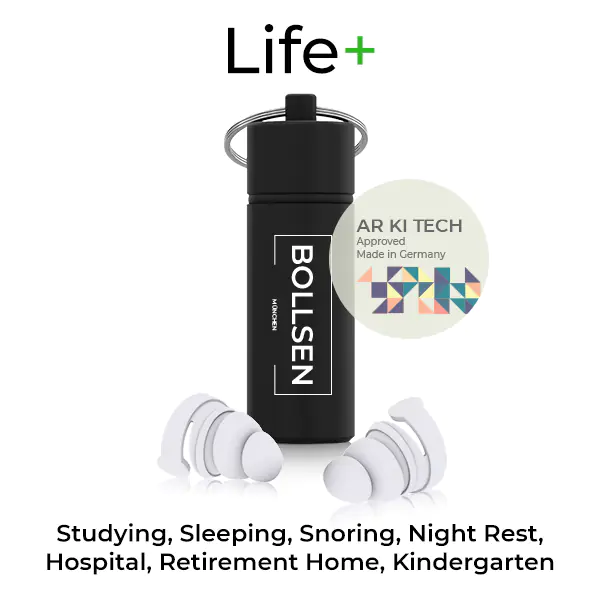
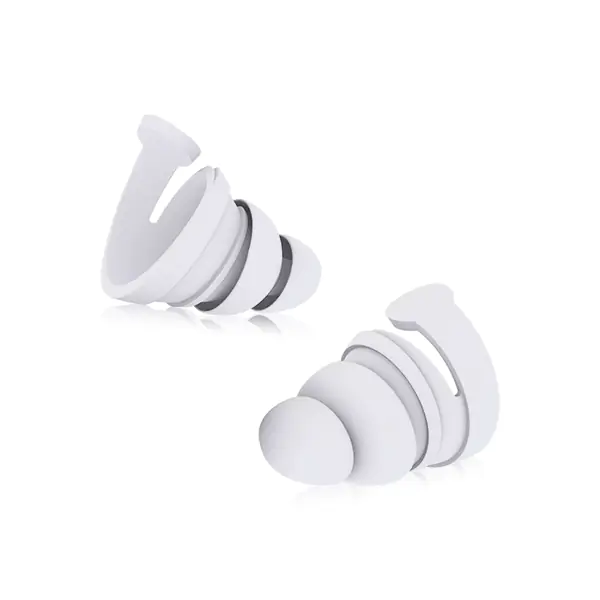
Match four things to your situation: how much noise you need to block (the SNR or NRR rating), the material (foam for maximum blocking, silicone or wax for comfort and reuse), the size and shape that suits your ear canal, and how you will use them, whether for sleep, work, or swimming. For nightly sleep, a soft, correctly sized reusable plug like the Bollsen Life+ fits most ears comfortably.
What size earplugs do I need?
Most adults fit a standard or medium plug, but ear canals vary a lot. If plugs feel tight, cause pressure, or keep falling out, you need a different size. Reusable plugs that come with more than one tip size let you match your ear without guessing.
What are the best earplugs for small ear canals?
Choose plugs labelled small or ones that ship with several tip sizes, and favour soft silicone that seals gently without pressure. A foam plug that is too large will feel painful and still never seal properly.
How do you know if earplugs fit properly?
A correct fit feels snug but not painful, noticeably muffles sound the moment it seals, and stays put when you talk or move your jaw. If sound leaks, the plug hurts, or it works loose overnight, the size or shape is wrong.
Are one-size-fits-all earplugs any good?
They work for average ears but not for very small or large canals. A plug that seals well for one person can leak or hurt for another, which is why adjustable or multi-size options fit more people reliably.



His connection to hearing protection stems from personal experience with sound sensitivity during live events and work in noisy environments, an issue that made him more aware of the long-term risks of unmanaged noise exposure. Today, as both a communicator and a user of BOLLSEN products, he is passionate about raising awareness around the importance of proactive hearing care.
At BOLLSEN, he develops data-driven marketing campaigns, writes SEO-focused articles, and manages communication channels that connect customers with practical knowledge about hearing protection. His work ensures that BOLLSEN’s message—prioritizing health, performance, and sustainability reaches a global audience in an engaging and trustworthy way.
Passionate about writing since childhood, Timotej combines creativity with a strong analytical approach, continuously testing new ideas in digital marketing, performance advertising, and social media. He believes in learning through innovation and collaboration, balancing leadership with openness to new perspectives.
Beyond his professional role, Timotej is committed to a healthy lifestyle and finds inspiration in fitness, sports, and quality time with friends. His personal passion for well-being aligns with BOLLSEN’s core values, making his work not only a career but also a cause he deeply believes in.