
⏱️ Estimated reading time: 16 min

Key Takeaways
Choosing earplugs for swimming sounds simple, right? But nearly one in five swimmers ends up with ear infections from poor ear protection. Most people just grab the first pair off the shelf, only to discover they barely work or feel uncomfortable. The trick is that the best earplugs are highly personal, shaped by your swimming routine and unique ear anatomy, so finding your perfect fit is more scientific than you may think.
Table of Contents
- Step 1: Determine Your Specific Needs For Earplugs
- Step 2: Research Earplug Materials And Types
- Step 3: Evaluate Fit And Comfort Options
- Step 4: Test Different Earplugs For Effectiveness
- Step 5: Make A Decision And Purchase The Chosen Earplugs
Quick Summary
| Key Point | Explanation |
|---|---|
| 1. Identify your earplug needs | Assess your swimming environment and ear health to choose appropriate ear protection. |
| 2. Prioritise silicone materials | Silicone earplugs adapt well and offer comfort for both casual and competitive swimmers. |
| 3. Ensure proper fit and comfort | Find earplugs that create a water-tight seal without causing discomfort during use. |
| 4. Systematically test effectiveness | Use structured testing to ensure earplugs perform well in real swimming conditions. |
| 5. Consider long-term value in purchase | Focus on quality and durability rather than just initial cost when buying earplugs. |
Step 1: Determine Your Specific Needs for Earplugs
Choosing the right earplugs for swimming is more nuanced than simply picking the first pair you see. Understanding your specific requirements will help you select the most effective ear protection for your aquatic activities.
Begin by carefully assessing your swimming environment and personal ear health. Are you a casual recreational swimmer, a competitive athlete, or someone frequently exposed to water activities? Different swimming scenarios demand different levels of ear protection. For instance, swimmers with a history of ear infections or sensitive ears will require more robust protection compared to occasional leisure swimmers.
Key Considerations for Swimmer’s Ear Protection:
- Ear canal shape and size
- Frequency of swimming
- Water environment (chlorinated pool, saltwater, fresh water)
- History of ear infections
- Personal comfort preferences
Moldable silicone earplugs often provide the most adaptable solution for swimmers. According to U.S. Masters Swimming, these types of earplugs can conform to individual ear canal shapes, creating a more reliable water-tight seal.
People with recurring ear infections or those swimming in untreated water should pay extra attention to their ear protection strategy. The goal is not just preventing water entry, but also minimizing potential health risks. Custom-fitted options or professional-grade earplugs might be necessary for individuals with specific medical concerns.
When evaluating your needs, consider the material’s comfort, durability, and reusability. Some swimmers prefer soft, hypoallergenic materials that won’t cause irritation during extended water activities. Others might prioritize earplugs that can withstand repeated use in chlorinated or saltwater environments.
Remember that finding the perfect earplug might require some experimentation. Don’t be discouraged if the first pair doesn’t meet your expectations. Many swimmers try multiple types before discovering their ideal ear protection solution. Pay attention to how the earplugs feel, their effectiveness in keeping water out, and any potential discomfort during use.
Step 2: Research Earplug Materials and Types
Understanding the diverse world of earplug materials is crucial for selecting the most suitable protection for your swimming needs. Different materials offer unique advantages and limitations, making your research phase a critical step in finding the perfect ear protection.
Silicone Earplugs: The Gold Standard
Silicone earplugs have emerged as a top choice for swimmers due to their exceptional flexibility and adaptability. According to U.S. Masters Swimming, these plugs can mold precisely to individual ear canal shapes, creating a superior water-tight seal. Their soft texture ensures comfort during extended water activities, making them ideal for both recreational and competitive swimmers.
Material Comparison for Swimmers:
- Silicone: Highly moldable, reusable, hypoallergenic
- Wax: Good temporary seal, less durable
- Foam: Not recommended for swimming, absorbs water
- Rubber: Rigid, less comfortable, potential allergic reactions
When evaluating materials, consider factors beyond water resistance. Hypoallergenic properties become crucial for individuals with sensitive skin or prone to ear irritations. Silicone’s non-reactive nature makes it an excellent choice for those with allergies or skin sensitivities.
Reusability is another important consideration. While some earplug materials require frequent replacement, high-quality silicone options can be cleaned and reused multiple times, offering both economic and environmental benefits. Look for plugs that maintain their shape and sealing capabilities after repeated use.
Texture and comfort play significant roles in earplug selection. Swimmers spend considerable time with these devices in their ears, so choosing a material that feels natural and doesn’t cause discomfort is essential.
Below is a table comparing the key earplug material options mentioned, summarising their main characteristics and suitability for swimming.
| Material | Key Features | Suitability for Swimming | Notes |
|---|---|---|---|
| Silicone | Highly mouldable, reusable, hypoallergenic | Excellent | Most recommended; adapts to ear canals |
| Wax | Temporary seal, less durable | Moderate | May not last as long |
| Foam | Absorbs water, disposable | Not recommended | Can increase ear infection risk |
| Rubber | Rigid, less comfortable, possible allergies | Limited suitability | May cause discomfort |
Remember that no single material works perfectly for everyone. Your unique ear anatomy, swimming frequency, and personal comfort preferences will ultimately guide your decision. Experimenting with different materials and styles will help you discover the most effective ear protection for your specific needs.
Step 3: Evaluate Fit and Comfort Options
Finding the perfect earplug fit is more than a simple measurement task it’s about creating a personalized seal that protects your ears while ensuring maximum comfort during swimming. The right fit can mean the difference between an enjoyable swimming experience and constant readjustment of your ear protection.
Understanding Individual Ear Anatomy
Each person’s ear canal is unique, which makes a one-size-fits-all approach ineffective. Your ear’s shape, size, and contours play a critical role in determining which earplugs will provide the most secure and comfortable protection. According to clinical research, personalized fitting is crucial for effective water protection and overall user comfort.
Key Comfort and Fit Evaluation Criteria:
- Ability to create a complete water-tight seal
- Minimal pressure on ear canal walls
- No slipping during active swimming movements
- Comfortable for extended wear
- Easy insertion and removal
When testing potential earplugs, pay close attention to how they feel during initial insertion. A well-fitted earplug should feel snug but not painful. Excessive pressure or discomfort indicates that the size or shape might not be ideal for your ear canal. Some swimmers find that slightly warming moldable silicone earplugs before insertion helps them conform more naturally to individual ear shapes.
Movement is a crucial testing factor. Swim a few laps or perform typical swimming movements to assess whether the earplugs remain securely in place. Earplugs that constantly slip or require frequent readjustment will disrupt your swimming rhythm and potentially compromise water protection.
Consider the thickness and flexibility of the earplug material. Softer, more pliable materials like medical-grade silicone tend to create better seals and adapt more comfortably to ear canal variations. Rigidity can lead to pressure points and potential discomfort during extended swimming sessions.
For those with particularly sensitive ears or unique ear canal structures, custom-molded earplugs might be the ultimate solution. These professionally crafted options provide a precise fit tailored specifically to your ear’s unique geometry. While more expensive, they offer unparalleled comfort and protection for frequent swimmers or individuals with specific ear health concerns.
Remember that finding the perfect earplug is often an iterative process. Don’t get discouraged if the first pair doesn’t meet your expectations. Many swimmers try multiple types and sizes before discovering their ideal ear protection. Trust your comfort level and be willing to experiment until you find a solution that feels natural and provides reliable water protection.
Step 4: Test Different Earplugs for Effectiveness
Testing earplugs for swimming effectiveness goes beyond simply purchasing a pair and hoping for the best. This critical step requires a systematic approach to ensure your chosen protection genuinely prevents water intrusion and maintains comfort during aquatic activities.
Creating a Comprehensive Testing Protocol
Your testing strategy should simulate real swimming conditions as closely as possible. According to scientific research, water intrusion rates can vary significantly depending on swimming movements and submersion techniques. This means you’ll need a multi-stage evaluation process to truly understand your earplugs’ performance.
Recommended Testing Stages:
- Dry fitting and comfort assessment
- Stationary water test
- Movement-based water resistance check
- Extended wear evaluation
Begin with a dry fitting to assess initial comfort and seal. Place the earplugs in your ears and perform gentle head movements to check for stability. Pay attention to any immediate pressure points or areas of discomfort. A good earplug should feel secure without causing pain or excessive tension.
Next, conduct a stationary water test in a controlled environment like a swimming pool or sink. Slowly submerge your head, keeping the earplugs in place. Gently move your head from side to side and up and down to simulate swimming motions. After emerging, carefully check if any water has penetrated the seal. A few drops might be acceptable, but significant water intrusion indicates the earplugs are not performing effectively.
The movement-based water resistance check is crucial. Swim several laps using different strokes swimmers typically use. Freestyle, breaststroke, and backstroke each create unique head and ear movements that can challenge your earplugs’ seal. Immediately after swimming, tilt your head to see if water drains from your ears. Completely dry ears suggest excellent earplug performance.
Extended wear evaluation helps determine long-term comfort and effectiveness. Wear the earplugs for progressively longer swimming sessions, monitoring how they feel and perform.
The table below outlines the recommended protocol for systematically testing different swimming earplugs, summarising key actions and what to observe at each testing stage.
| Testing Stage | Action | What to Observe |
|---|---|---|
| Dry fitting and comfort | Insert earplugs and move head gently | Initial comfort, secure fit, pressure points |
| Stationary water test | Submerge head with earplugs in | Water intrusion, seal quality |
| Movement-based resistance | Swim laps with varied strokes | Seal during active movement, slipping |
| Extended wear evaluation | Wear for longer sessions | Long-term comfort, ongoing effectiveness |
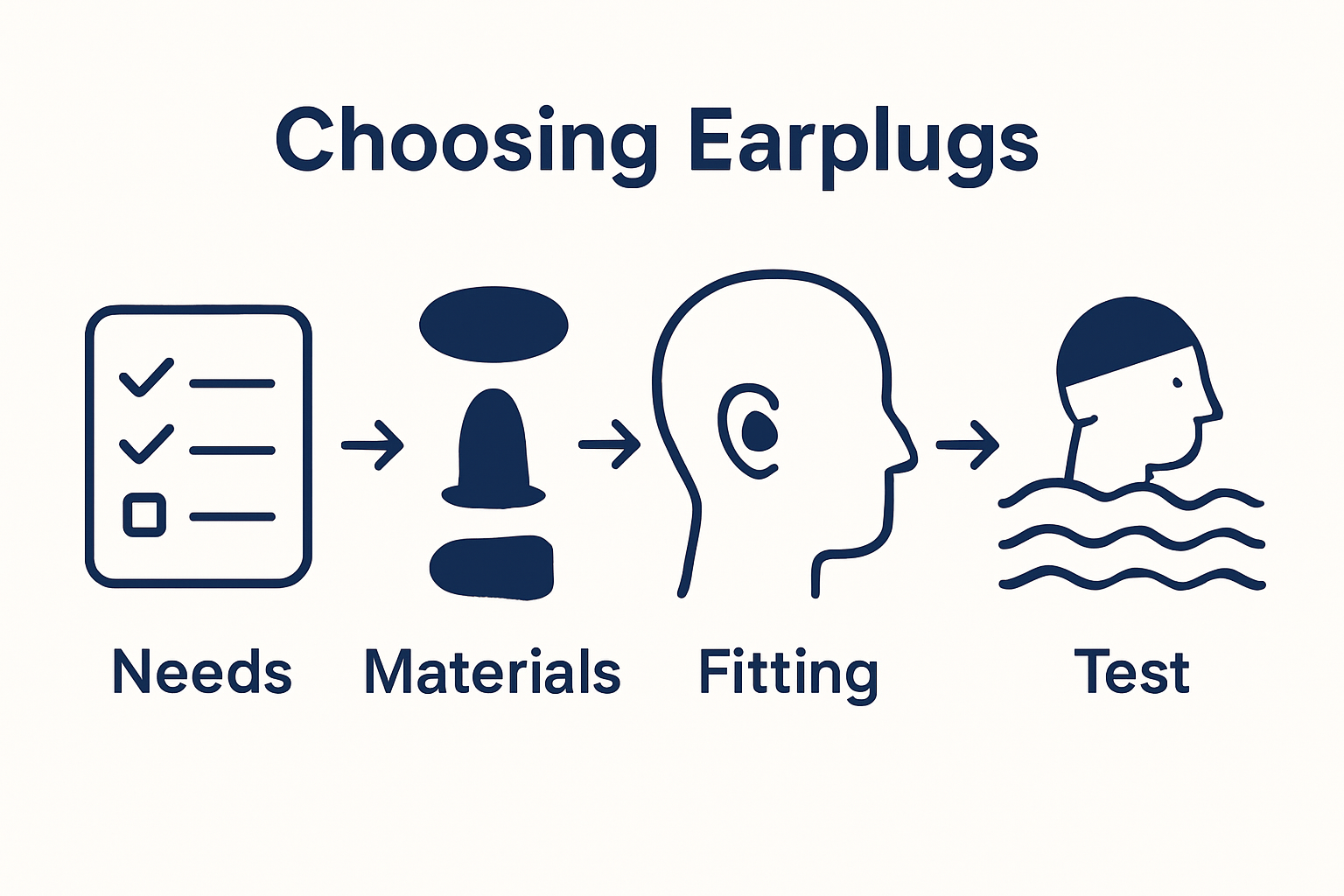 Note details like how long the earplugs remained comfortable, their water-resistance performance, and any challenges encountered during testing. This systematic approach transforms earplug selection from guesswork into a scientific process, ensuring you find the most suitable protection for your swimming needs.
Remember that perfect earplugs are highly personal. What works brilliantly for one swimmer might be uncomfortable for another. Patience and thorough testing are key to finding your ideal ear protection.
Step 5: Make a Decision and Purchase the Chosen Earplugs
Reaching the final stage of earplug selection requires careful consideration and a strategic approach to purchasing. Your previous research, testing, and evaluation have prepared you to make an informed decision that balances comfort, effectiveness, and personal swimming needs.
Finalizing Your Earplug Selection
Transitioning from testing to purchasing involves more than simply picking the first pair that seems suitable. According to U.S. Masters Swimming, selecting the right earplugs requires a nuanced understanding of your specific requirements and swimming environment.
Critical Purchase Considerations:
- Total budget allocation
- Durability and expected lifespan
- Potential replacement costs
- Warranty or return policies
- Compatibility with your swimming routine
When making your final selection, prioritize quality over immediate cost savings. Cheaper earplugs might seem attractive, but they often compromise on crucial aspects like water resistance, comfort, and longevity. Look for reputable manufacturers that offer transparent product specifications and clear usage guidelines.
Consider purchasing from specialized swim equipment retailers or trusted online platforms that provide detailed product descriptions and customer reviews. These resources can offer additional insights into real-world performance beyond your initial testing. Pay close attention to feedback from swimmers with similar ear characteristics or swimming environments.
Evaluate the long-term value of your purchase. Some higher-priced earplugs might initially seem expensive but could prove more economical due to their durability and superior performance. Moldable silicone options, for instance, often provide better value through multiple uses compared to disposable alternatives.
Before completing your purchase, double-check the return and exchange policies. Even after thorough testing, you might discover subtle comfort issues during extended use. A flexible return policy provides an additional safety net, ensuring you’re not stuck with earplugs that don’t meet your expectations.
If possible, purchase from retailers offering size variety or starter packs. These options allow you to experiment with different configurations without committing to a single expensive pair. Some manufacturers provide trial sets that include multiple sizes or materials, giving you greater flexibility in finding your perfect fit.
Remember that your first purchase might not be perfect, and that’s okay. Swimming ear protection is a personal journey of discovery. Be patient with yourself, remain open to trying different options, and prioritize your ear health and swimming comfort above all else.
Discover Swimming Earplugs That Fit Your Unique Needs, Swiftly and Safely
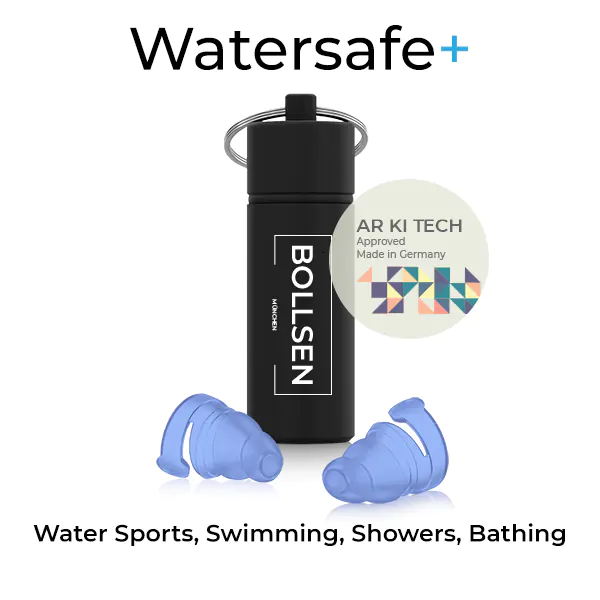
Have you struggled to find earplugs for swimming that actually keep water out, feel comfortable for long sessions and protect your health? This guide has shown just how vital a precise fit, genuine water-tightness and hypoallergenic materials are for swimmer’s ear protection. If you have faced disappointment with generic or disposable plugs, it is time for a smarter approach. Bollsen Hearing Protection offers medical-grade silicone earplugs developed to mold effortlessly to your ear canal, keeping water at bay while prioritising your comfort and well-being. Our solutions are designed not only for swimmers but also for those with a history of ear infections or sensitive skin, directly addressing the pain points discussed in your research and testing process.
Start exploring today to find earplugs created especially for water activities. Experience the advantage of AR KI TECH customisation, a 40-day satisfaction guarantee and eco-friendly materials that set a new standard for ear safety. Protect your ears and transform your swimming experience now by choosing Bollsen’s Swimming Earplugs. Don’t wait until another swim leaves you with discomfort or worry. Visit our main site, read customer reviews and make the switch to professional-grade protection today.



His connection to hearing protection stems from personal experience with sound sensitivity during live events and work in noisy environments, an issue that made him more aware of the long-term risks of unmanaged noise exposure. Today, as both a communicator and a user of BOLLSEN products, he is passionate about raising awareness around the importance of proactive hearing care.
At BOLLSEN, he develops data-driven marketing campaigns, writes SEO-focused articles, and manages communication channels that connect customers with practical knowledge about hearing protection. His work ensures that BOLLSEN’s message—prioritizing health, performance, and sustainability reaches a global audience in an engaging and trustworthy way.
Passionate about writing since childhood, Timotej combines creativity with a strong analytical approach, continuously testing new ideas in digital marketing, performance advertising, and social media. He believes in learning through innovation and collaboration, balancing leadership with openness to new perspectives.
Beyond his professional role, Timotej is committed to a healthy lifestyle and finds inspiration in fitness, sports, and quality time with friends. His personal passion for well-being aligns with BOLLSEN’s core values, making his work not only a career but also a cause he deeply believes in.