
⏱️ Estimated reading time: 15 min

Key Takeaways
Yes. Even moderate noise at 40 dB(A), quieter than a normal conversation, causes sleep stage changes in 51% of people, and sustained noise suppresses melatonin production and raises cortisol, both of which are essential markers of a healthy circadian cycle.
The WHO recommends bedroom noise below 30 dB(A) at night. Physiological arousal responses begin at just 33 dB(A). At 55 dB(A), typical of a busy urban street, full arousals and insomnia occur.
Yes. The brain continues processing and registering sound throughout every stage of sleep. Even without conscious waking, noise triggers micro-arousals, raises stress hormones, and fragments restorative sleep architecture, particularly REM.
Research published on PMC (PMC2887188) found that simulated noise exposure suppressed melatonin from 26.5 to 15.1 micrograms per kilogram and doubled cortisol from 2.0 to 4.0 micrograms per kilogram. Both are major disruptions to the hormonal signals that govern your body clock.
Your cochlea, the inner ear’s sensory organ, has its own circadian clock that reduces protective capacity during nighttime hours. The same sound intensity that causes a reversible hearing threshold shift during the day can cause permanent damage at night.
The same PMC study found that earplugs and eye masks together restored REM sleep from 9.3% under noise exposure to 12.9%, and shortened REM latency from 146.9 minutes to 105.7 minutes. Blocking noise consistently is one of the most evidence-supported ways to protect your body clock.
Most people who live near a busy road have told themselves this at some point: “I’ve got used to it.” It feels true. You stop noticing the traffic at 2 am. You fall asleep without lying awake counting lorries.
But research consistently suggests that sense of adaptation lives mostly in your conscious mind, not your body. At noise levels as low as 33 dB(A), quieter than a whispered conversation, your stress hormones are still rising, your sleep stages fragmenting, your melatonin suppressed. The World Health Organisation estimates that over 40% of the EU population is exposed to road traffic noise above 55 dB(A) at night.
That is not a minor nuisance. It is a physiological event happening to millions of people every night, usually without their awareness. This article explains the mechanism by which noise disrupts your circadian rhythm, which noise thresholds actually matter, and what the clinical evidence says about protecting your sleep.
Does Noise Directly Disrupt the Circadian Rhythm?
Noise disrupts your circadian rhythm indirectly but powerfully, primarily by suppressing melatonin secretion and raising cortisol, the two hormones that govern when your body clock tells you to sleep and when to wake. Your circadian rhythm is orchestrated by the suprachiasmatic nucleus (SCN), a cluster of roughly 20,000 neurons in the anterior hypothalamus that responds to light as its primary zeitgeber, or timing cue. Noise is not a zeitgeber in the same direct sense; it does not reset the SCN’s 24-hour cycle the way light does. But it triggers a cascade of physiological stress responses that undermine every process the SCN is trying to regulate.
A 2020 review published in Exploration Publishing examined the combined and individual effects of artificial light and noise on melatonin and cortisol in sleeping subjects. Noise alone at 55 dB(A) was sufficient to cause arousal events. Combined pre-sleep exposure to noise and artificial light reduced total sleep duration by 15.3%. Exposure to both stressors during sleep cut it by a further 14% and sleep efficiency by 9%.
The mechanism is well understood: auditory stimuli during sleep activate the amygdala and hippocampus even without conscious perception, triggering cortisol release through the hypothalamic-pituitary-adrenal (HPA) axis, exactly the stress response the circadian system is trying to suppress during nighttime hours.
Our guide on noise effects on sleep quality covers these mechanisms in depth, including why some sounds are harder to sleep through than others.
The same 40 dB intrusion that leaves most sleepers undisturbed produces measurable melatonin suppression in noise-sensitive individuals. Noise sensitivity sleep and circadian rhythm disruption is dose-dependent on individual auditory threshold, not ambient dB level alone.What dB Thresholds Actually Matter for Sleep?
The WHO Night Noise Guidelines for Europe establish a critical threshold at 30 dB(A) for bedroom noise and 40 dB(A) as the outdoor interim target, below which most people sleep without measurable biological disruption, and above which specific physiological responses begin in a predictable sequence. These are not arbitrary comfort guidelines. They are derived from epidemiological data linking noise exposure levels to specific health outcomes, including cardiovascular disease, cognitive impairment in children, and sleep disorder diagnoses.
What happens as noise increases follows a clear pattern. At 33 dB(A), the first measurable physiological arousal responses appear: subtle changes in heart rate and body movement that do not produce waking. At 40 dB(A), sleep stage changes occur in 51% of exposed individuals. At 50.3 dB(A), awakening events begin.
At 55 dB(A), full arousals and disrupted sleep architecture appear consistently. That is the level most urban environments in Europe exceed on a typical weeknight. The WHO reports that over 30% of Europeans face night-time noise above 55 dB(A), and more than 100 million people in the EU are exposed to road traffic noise at levels harmful to health.
For context, a bedroom window left ajar on a moderately busy road in London, Manchester, or Birmingham will commonly sit at 50–60 dB(A) at night. Double glazing typically reduces this by 25–30 dB. A bedroom achieving 40 dB(A) indoors still sits above the WHO threshold.
Why Is Nighttime Noise More Dangerous Than Daytime Noise?
Your cochlea, the inner ear’s primary sensory organ, contains its own circadian clock, and this cochlear clock is significantly less protective during nighttime hours, meaning the same sound intensity that causes a reversible hearing threshold shift (TTS) during the day can cause a permanent hearing threshold shift (PTS) at night. Few sleep hygiene articles mention this, but it is well documented in auditory neuroscience. Research published in Frontiers in Neuroscience (PMC11958988) on the cochlear circadian clock confirms that noise-induced hearing damage follows a circadian pattern, with peak vulnerability occurring precisely during the hours most people are trying to sleep.
The mechanism centres on the efferent olivocochlear system, which normally provides some protective modulation of the cochlea’s sensory hair cells. At night, this protective capacity is reduced as part of the cochlea’s own circadian programme. The same 85 dB(A) sound that might cause a self-resolving shift during an afternoon has a greater likelihood of producing permanent cellular damage when the exposure occurs at 3 am. For people who sleep near industrial noise, busy roads, or in environments where aircraft noise intrudes at night, this is a clinically relevant distinction.
Does the “You Get Used to It” Idea Actually Hold Up?
The idea that the brain habituates to chronic noise exposure and stops reacting is contradicted by the evidence: even people who report that they “sleep fine” with background noise show persistent arousal responses, raised stress hormones, and suppressed REM sleep when measured clinically. Sleep communities online frequently cite the “I’ve adapted” experience as evidence that noise becomes harmless over time. The science says otherwise.
The auditory cortex remains active during sleep. It continues classifying incoming sounds, assigning threat values, and triggering micro-arousals through the amygdala even when the sleeper has no conscious awareness of this. The body’s alarm system cannot be trained out through repeated exposure; it can only be blocked from receiving the signal in the first place.
Cortisol and adrenaline do not distinguish between conscious and unconscious arousal. A 2020 Exploration Publishing study found that road traffic noise increased urinary adrenaline by 26% in highly disturbed women, even in subjects who had lived with those noise levels for extended periods.
What Happens to REM Sleep Under Noise Exposure?
REM sleep, the stage responsible for memory consolidation, emotional regulation, and cognitive restoration, is measurably suppressed and delayed by noise exposure, even at levels that do not produce full awakening. The PMC study (PMC2887188) conducted in a simulated ICU environment found that subjects exposed to recorded noise and light averaged only 9.3% REM sleep, compared to a baseline of 10.9%. When the same subjects were protected with earplugs and eye masks, REM sleep rose to 12.9%, above baseline, and REM latency (the time from sleep onset to the first REM period) fell from 146.9 minutes in the noise-exposed condition to 105.7 minutes with protection. Both outcomes were statistically significant (P = 0.005 and P = 0.013 respectively).
Arousal events, brief neurological awakenings that fragment sleep continuity even without full consciousness, also shifted: 15.1 per night under noise and light exposure, versus 12.2 with earplug and eye mask protection, and 13.0 at baseline. Blocking noise restored sleep architecture to above-baseline levels, not merely back to normal. This matters because REM deficits accumulate. A night of 9% REM is not just one bad night; repeated over weeks, it affects mood stability, working memory, and immune function.
For a detailed look at the clinical evidence, our article on long-term earplug safety covers ear health outcomes and overnight comfort directly.
Is White Noise Actually a Good Solution?
White noise machines and apps are widely recommended for drowning out disruptive noise during sleep, but emerging 2026 research suggests that adding constant broadband sound at night may itself reduce REM sleep, and that earplugs outperform white noise at protecting deep, restorative sleep from traffic noise specifically. The white noise approach has intuitive appeal: mask an unpredictable, harmful sound with a predictable, neutral one. In many lab conditions, it reduces arousal events from variable noise. But the assumption that adding more sound to the sleep environment is inherently neutral is now being questioned.
A ScienceDaily-reported 2026 study found that pink noise significantly reduced REM sleep duration, while subjects using simple earplugs showed better preservation of deep, restorative sleep from traffic noise than those using sound masking. The cochlear circadian clock finding adds further weight to this concern: any consistent auditory stimulus at night, even “neutral” sound, activates the auditory pathway at a time when the inner ear is most vulnerable. Reducing total acoustic input to the sleeping ear, rather than adding to it, is the more defensible approach.
How Does Noise Affect Melatonin and Cortisol?
Noise during sleep measurably suppresses melatonin, the hormone secreted by the pineal gland that signals darkness to every cell in the body and drives the circadian timing of sleep onset, and at the same time raises cortisol, the primary stress hormone with its own circadian oscillation that is meant to be at its lowest point between midnight and 3 am. The PMC2887188 study found that subjects exposed to simulated ICU noise and light had urinary melatonin (measured as 6-SMT, the primary melatonin metabolite) reduced from 26.5 to 15.1 micrograms per kilogram. Cortisol doubled from 2.0 to 4.0 micrograms per kilogram under the same conditions. When earplugs and eye masks were used, melatonin partially recovered to 22.3 micrograms per kilogram.
This matters beyond the single night. Melatonin is not just a sleep signal. It is a potent antioxidant with known roles in immune function and cardiovascular regulation.
Chronically suppressed melatonin from sustained noise exposure has been linked in epidemiological studies to increased rates of hypertension and metabolic disruption. The WHO Europe Noise Fact Sheet estimates that road traffic noise is associated with 48,000 new cases of heart disease in Europe each year. The hormonal pathway, in which noise suppresses melatonin and melatonin suppression impairs cardiovascular protection, is a plausible mechanism for a portion of that burden.
Can Earplugs Protect Circadian Rhythm During Sleep?
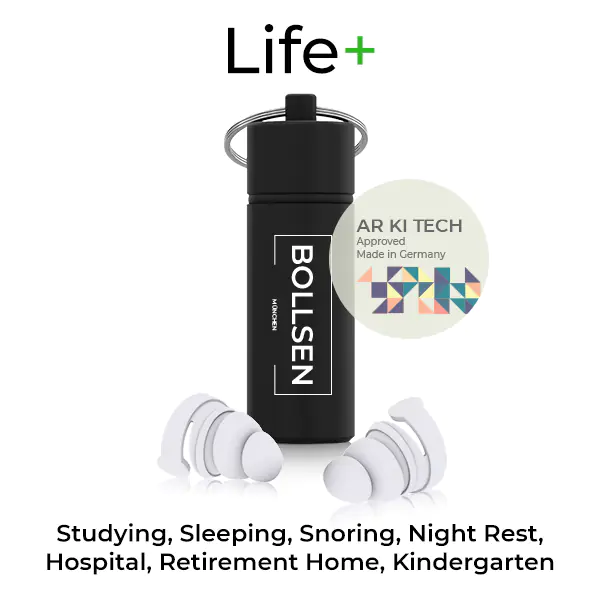
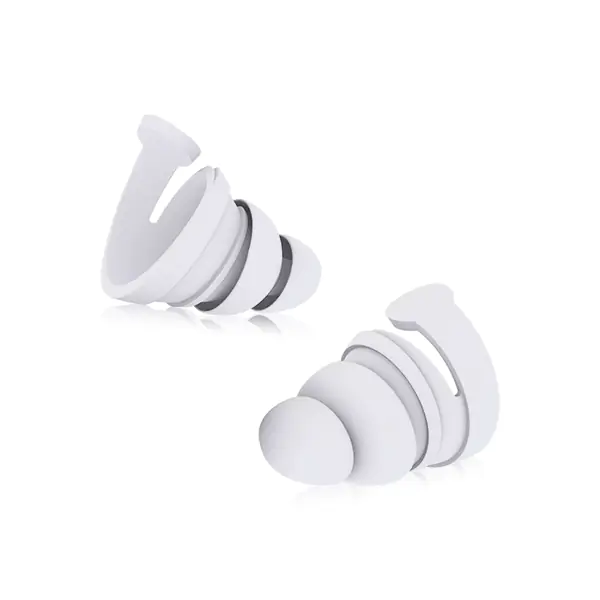
The PMC data is direct: earplugs used consistently restored REM sleep, shortened REM latency, reduced arousal events, and partially restored melatonin. Our sleep earplugs buyer’s guide explains what SNR rating to look for and which designs work for side sleepers.


The broader context is covered in our earplugs for sleeping cluster hub.
Foam earplugs lose seal integrity within 4-6 hours as the material compresses under body heat. Silicone, wax, and foam attenuation consistency across a sleep cycle differs significantly in how each material responds to sustained body heat and compression.What Is the Scale of the Noise Problem at Night in Europe?
More than 100 million people in the EU are exposed to road traffic noise at levels the WHO considers harmful to long-term health, with over 40% of the EU population facing night-time road traffic noise above 55 dB(A), the threshold at which full arousals and sleep disruption occur consistently. These figures, from the WHO Europe Noise Fact Sheet and European Environment Agency data, represent the largest environmental health burden in Europe after air pollution. Children, the elderly, and people with pre-existing cardiovascular or metabolic conditions are most at risk.
In the UK, road traffic noise in urban centres routinely produces outdoor levels of 65–75 dB(A) during evening hours, which, even accounting for building attenuation, places many bedrooms above the WHO interim threshold of 40 dB(A) indoors. The 48,000 new heart disease cases per year attributed to European road traffic noise by the EEA are not distributed randomly: they cluster in urban populations with the least residential noise insulation and the least access to quiet green space.
Understanding SNR ratings for sleep earplugs can help anyone living in a noisy environment choose protection that genuinely reduces their bedroom noise to within safe thresholds.
Conclusion
The evidence on noise and circadian disruption is specific, measurable, and consistent across independent research sources. Noise at 33 dB(A) triggers physiological responses in sleeping subjects. At 40 dB(A), half of sleepers experience sleep stage changes. At 55 dB(A), a level that describes most urban UK bedrooms, full arousals, hormonal disruption, and REM suppression occur routinely.
The idea that the brain adapts to chronic noise is a comfort myth: the auditory cortex continues registering, classifying, and reacting to sound throughout the night, regardless of how long you have lived with it.
Earplugs are not a comfort purchase they are a protective intervention with clinical data behind them. If you live near a road, railway, or any noise source that consistently puts your bedroom above 40 dB(A) at night, the research on what to do is unambiguous. Choosing a model rated above 24 dB SNR in a soft, reusable design is the practical starting point.

His connection to hearing protection stems from personal experience with sound sensitivity during live events and work in noisy environments, an issue that made him more aware of the long-term risks of unmanaged noise exposure. Today, as both a communicator and a user of BOLLSEN products, he is passionate about raising awareness around the importance of proactive hearing care.
At BOLLSEN, he develops data-driven marketing campaigns, writes SEO-focused articles, and manages communication channels that connect customers with practical knowledge about hearing protection. His work ensures that BOLLSEN’s message—prioritizing health, performance, and sustainability reaches a global audience in an engaging and trustworthy way.
Passionate about writing since childhood, Timotej combines creativity with a strong analytical approach, continuously testing new ideas in digital marketing, performance advertising, and social media. He believes in learning through innovation and collaboration, balancing leadership with openness to new perspectives.
Beyond his professional role, Timotej is committed to a healthy lifestyle and finds inspiration in fitness, sports, and quality time with friends. His personal passion for well-being aligns with BOLLSEN’s core values, making his work not only a career but also a cause he deeply believes in.