
⏱️ Estimated reading time: 11 min

Key takeaways
Water is not dangerous in itself, but it becomes risky because a perforated tympanic membrane no longer blocks the path to the middle ear. When water reaches that space it can carry bacteria with it and increase the chance of otitis media, which is why keeping the ear dry is the single most important precaution.
Soft silicone plugs that sit at the entrance of the ear canal are generally the safest everyday option because they create an external seal without pushing material deep toward the eardrum. Deep expanding foam plugs are usually less suitable because they add pressure and can trap moisture.
You can shower, but you should protect the ear either with a gentle cotton ball coated in petroleum jelly or with a soft silicone plug that seals the outer canal. Letting water run freely into the ear increases the risk of irritation or infection.
Most doctors recommend avoiding swimming until the tympanic membrane has healed. If swimming is unavoidable, reliable ear protection such as custom swimmer’s plugs combined with a tight swim cap offers better protection than ordinary plugs alone.
Extra care is usually needed for two to eight weeks, which is the typical healing window for most perforations. If the hole has not closed after about two months, your doctor may suggest myringoplasty or tympanoplasty.
You should seek medical advice if you have persistent pain, discharge, worsening hearing, dizziness, or if the perforation does not show signs of healing after several weeks. An ENT specialist can check the eardrum with an otoscope and recommend the best next steps.
Keep the ear dry, avoid deep insertion of anything into the ear canal, and choose gentle external protection over tight internal plugs while the tympanic membrane heals.
When your eardrum is perforated, the thin membrane between the ear canal and the middle ear is torn, and that small change has a big effect on how your ear reacts to water, pressure, and sound. Because this membrane normally protects the middle ear from the outside world, choosing ear protection becomes not just a comfort choice, but a medical one.
Why does a perforated eardrum need special protection?
A perforated eardrum is a tear in the tympanic membrane that usually acts as a barrier against water, bacteria, and debris. Once that barrier is broken, the middle ear becomes more exposed, which explains why people with a perforation are more prone to otitis media, fluid leakage, irritation, and temporary hearing problems.In everyday life this means something subtle but important, your ear is no longer just a listening organ, it is a healing tissue that reacts to moisture and pressure. Even a simple shower or a windy day can feel different. Protection, therefore, should be gentle and preventive rather than tight or aggressive.What actually changes inside the ear when the tympanic membrane is perforated?
When the tympanic membrane is perforated, three things tend to happen together. First, water can slip past the ear canal more easily and reach the middle ear. Second, bacteria have a shorter path to deeper structures. Third, pressure changes, for example during showering, swimming, or even blowing your nose, can feel uncomfortable or dizzying.Some people also notice conductive hearing loss or tinnitus, not because their hearing nerve is damaged, but because the torn membrane no longer vibrates normally. All of this explains why protection should reduce moisture and pressure rather than push material deeper into the ear.What should “best” ear protection actually do for a perforated eardrum?
Good protection is less about blocking sound and more about creating a calm, dry environment for the ear to heal. The ideal solution gently seals the outer ear without penetrating deep into the canal, avoids pressing on the tympanic membrane, feels soft against sensitive skin, and can be cleaned easily.If a device traps moisture, creates pressure, or is difficult to keep hygienic, it is working against healing rather than supporting it. Noise reduction is helpful in loud places, but with a perforation, moisture control always comes first.Which type of ear protection works best for a perforated eardrum?
Are foam earplugs safe for a perforated eardrum?
Foam earplugs are popular for sleeping and noise reduction, but they are usually a poor match for a perforated eardrum. Because they expand inside the canal, they tend to push moisture deeper, press outward on delicate tissue, and can trap bacteria over time.In practice, this can make drainage harder and sometimes slow the healing of the tympanic membrane. They can be acceptable for very short periods in dry, noisy environments, but they are not a good choice for showering, swimming, or any situation involving water.Are silicone earplugs better for a perforated eardrum?
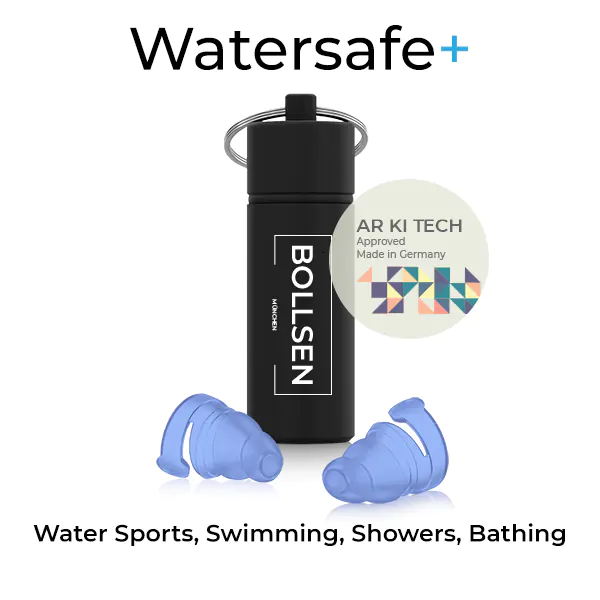
Yes, when they sit at the entrance of the ear canal rather than deep inside it. Earplugs for water, such as Bollsen Watersafe+ earplugs, create a soft external seal instead of internal pressure.Because they do not expand in the canal, they avoid pressing directly on the perforated tympanic membrane. They are also washable and reusable, which lowers the risk of infection if used regularly. For showering, bathing, or light splash exposure, this style of plug is often the most practical everyday option.


Can you swim with a perforated eardrum?
Most doctors advise avoiding swimming while the tympanic membrane is perforated because water exposure increases the chance of infection in the middle ear. Even clean pool water contains microorganisms that can cause problems once they pass the broken membrane.If swimming cannot be avoided, protection matters. Custom plugs or high quality silicone plugs should be combined with a snug swim cap. Diving, jumping, or deep submersion should be avoided, as these create pressure changes that can stress the healing eardrum.What is the safest protection for showering with a perforated eardrum?
For showering, ENT specialists often suggest two simple approaches. One is a small cotton ball lightly coated with petroleum jelly, placed gently in the outer ear. The other is a soft silicone plug that seals the entrance of the canal.Hard plastic plugs, deep foam plugs, or anything that feels tight inside the ear are better avoided. The aim is not to block sound, but to keep water out without irritating the tympanic membrane.Is noise protection still necessary with a perforated eardrum?
If your perforation was caused by acoustic trauma or you work in a loud environment, you still need hearing protection. In this situation, over ear earmuffs are usually the safest because they protect hearing without touching the ear canal at all.If in ear protection is preferred, it should be soft and external rather than deep and expanding. The goal is to protect your inner ear while allowing the torn membrane to heal undisturbed.How long does a perforated eardrum take to heal?
Most perforations heal naturally within 2 to 8 weeks as long as the ear is kept dry and free from infection. During this time, careful protection is part of treatment, not just an accessory.If the hole has not closed after about two months, doctors may suggest myringoplasty, where a small paper patch is placed over the tear, or tympanoplasty, a surgical repair using your own tissue to rebuild the membrane.What are the risks of using the wrong earplugs?
Using the wrong earplugs can quietly create more problems than it solves. They may trap water in the canal, increase pressure on the tympanic membrane, or push bacteria closer to the middle ear.Over time this can slow healing, trigger new infections, or even contribute to chronic ear issues. The simplest rule is, if a plug feels tight, deep, or uncomfortable, it is probably not right for a perforated eardrum.How do doctors diagnose and monitor a perforated eardrum?
Doctors usually begin with an otoscope, a small handheld light that allows them to look directly at the tympanic membrane. This visual check often confirms whether a perforation is present and how large it appears.If hearing seems affected, they may perform audiometry to measure hearing levels and tympanometry to see how the eardrum moves. When symptoms are significant, referral to an ENT specialist, also called an otolaryngologist, is common.How is a perforated eardrum treated?
Many perforations heal on their own with time and dry care. If infection is present, doctors may prescribe antibiotics. Larger or persistent tears may require surgical repair such as tympanoplasty.Across all treatments, one message is consistent, keeping the ear dry and protected is essential for recovery.
His connection to hearing protection stems from personal experience with sound sensitivity during live events and work in noisy environments, an issue that made him more aware of the long-term risks of unmanaged noise exposure. Today, as both a communicator and a user of BOLLSEN products, he is passionate about raising awareness around the importance of proactive hearing care.
At BOLLSEN, he develops data-driven marketing campaigns, writes SEO-focused articles, and manages communication channels that connect customers with practical knowledge about hearing protection. His work ensures that BOLLSEN’s message—prioritizing health, performance, and sustainability reaches a global audience in an engaging and trustworthy way.
Passionate about writing since childhood, Timotej combines creativity with a strong analytical approach, continuously testing new ideas in digital marketing, performance advertising, and social media. He believes in learning through innovation and collaboration, balancing leadership with openness to new perspectives.
Beyond his professional role, Timotej is committed to a healthy lifestyle and finds inspiration in fitness, sports, and quality time with friends. His personal passion for well-being aligns with BOLLSEN’s core values, making his work not only a career but also a cause he deeply believes in.
Comments are closed.