
⏱️ Estimated reading time: 8 min

Key Takeaways
Sleep apnea is a medical condition. It happens when breathing stops and starts during sleep, which lowers oxygen levels and puts stress on the body. It is not just a sleep habit or a noise issue.
No, earplugs cannot treat or cure sleep apnea. They do not open the airway or stop breathing pauses. Medical treatments are needed to manage the condition.
Earplugs mostly help people who are affected by the noise, especially partners who sleep next to someone with sleep apnea. They can also help block background noise for people already using medical treatment.
Yes, earplugs can reduce snoring sounds and CPAP machine noise. This can make it easier for partners to fall asleep and stay asleep in a shared bedroom.
Because earplugs only reduce sound, not breathing problems. Without medical treatment, sleep apnea can harm the heart, brain, and overall health. Earplugs should never replace seeing a doctor.
What Is Sleep Apnea and Why Is It Considered a Medical Condition?
Sleep apnea is a chronic sleep-related breathing disorder in which airflow repeatedly stops during sleep, reducing oxygen levels and putting stress on the cardiovascular and nervous systems.
Sleep apnea is not a noise issue, a sleep habit, or a comfort problem, it is a medically diagnosed condition that directly affects breathing, oxygen saturation, and sleep architecture.
The most common form, obstructive sleep apnea (OSA), occurs when the upper airway collapses or becomes blocked during sleep, causing repeated breathing pauses that can last several seconds. A less common form, central sleep apnea (CSA), occurs when the brain fails to send consistent signals to the muscles that control breathing.
Because sleep apnea interferes with respiratory function, oxygen delivery, heart health, and cognitive performance, it increases the risk of conditions such as hypertension, heart disease, stroke, type 2 diabetes, and excessive daytime sleepiness. Over time, untreated sleep apnea can impair concentration, memory, and reaction time, affecting both quality of life and long-term health.
For these reasons, sleep apnea requires proper medical evaluation, diagnosis (often through sleep studies such as polysomnography), and evidence-based treatment options such as CPAP therapy, oral appliances, positional therapy, or, in some cases, surgery not sound-blocking or environmental solutions.
Why people snore and the physiological line between snoring and sleep apnea is defined by whether tissue vibration reflects partial or complete airway obstruction. The two conditions share acoustic output but diverge sharply in medical management. Tinnitus occurs more frequently in sleep-disordered breathing than in matched populations, and whether earplugs help with tinnitus in sleep-disordered breathing explains the likely mechanism and what passive attenuation can and cannot address.
The NHS guidance on snoring and sleep apnoea notes that snoring accompanied by gasping, choking, or pauses in breathing is a key indicator of obstructive sleep apnoea, a medical condition requiring clinical assessment and distinct from simple positional snoring.
Who Can Actually Benefit From Earplugs When Sleep Apnea Is Involved?
Earplugs do not treat sleep apnea, but they can still be helpful in certain situations. Their main role is to reduce noise, not to fix breathing problems during sleep.
For many people, earplugs are most helpful for partners who sleep next to someone with sleep apnea. Loud snoring, gasping sounds, or CPAP machine noise can make it hard for the partner to fall asleep or stay asleep. Earplugs can lower these sounds and make the bedroom quieter.
Some people with sleep apnea also use earplugs to block out background noise, such as traffic, neighbors, or household sounds. This can help them sleep more comfortably while they are using treatments like CPAP therapy. However, earplugs should never replace medical treatment or delay seeing a doctor.
Earplugs address the acoustic component but not the physiological concern. How to sleep next to a snoring partner with sleep apnea covers when passive attenuation is sufficient and when the partner’s arousal responses require a different approach.
The Sleep Foundation guidance on earplugs for sleeping confirms that earplugs provide meaningful noise attenuation for sleep partners of people with sleep apnoea, reducing the impact of breathing sounds on the partner’s sleep continuity while medical treatment is assessed or implemented.
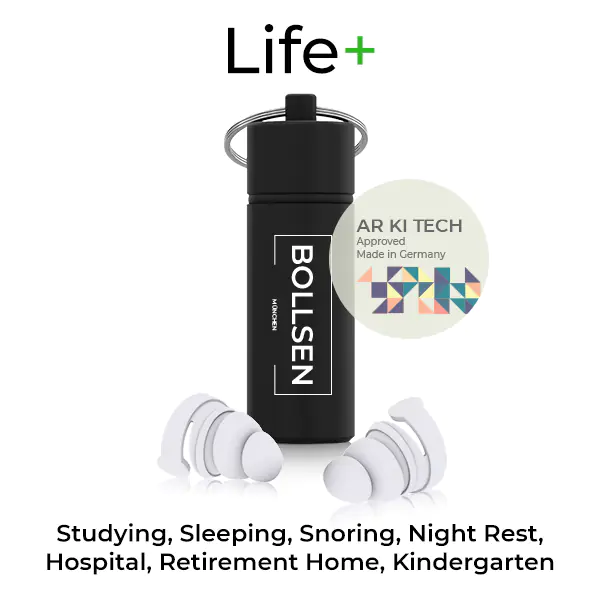
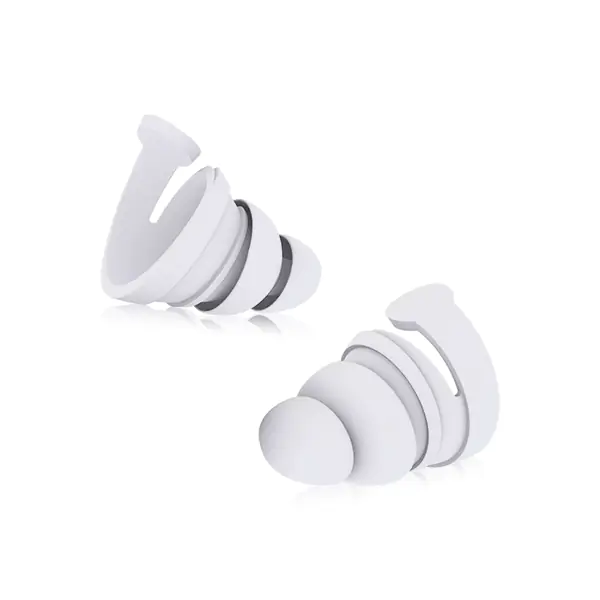
For partners who mainly need to block the noise, comfort across a full night matters more than maximum attenuation. Bollsen Life+ earplugs for sleeping are rated 24 dB SNR, made from soft medical-grade silicone, reusable up to 100 times, and priced at £29.95. Their low-profile shape stays comfortable through the night next to a snoring or CPAP-using partner without pressing against the pillow.


Should You Use Earplugs If You Have Sleep Apnea?
Sleep apnea is a serious medical condition that affects how a person breathes during sleep. It cannot be treated with earplugs, because earplugs do not fix airway blockages or breathing pauses. Proper diagnosis and medical treatment are always the most important steps for managing sleep apnea and protecting long-term health.
That said, earplugs can still play a helpful role in shared sleep environments. They can reduce noise from snoring, CPAP machines, or other nighttime sounds, making it easier for partners to get better rest. In some cases, they can also help people with sleep apnea block out background noise while they use their prescribed treatment.
When used safely and correctly, earplugs can support better sleep comfort but they should never be seen as a treatment for sleep apnea itself. Understanding this difference helps ensure that the condition is taken seriously and managed the right way, while still allowing simple tools like earplugs to improve sleep for those affected around it.

His connection to hearing protection stems from personal experience with sound sensitivity during live events and work in noisy environments, an issue that made him more aware of the long-term risks of unmanaged noise exposure. Today, as both a communicator and a user of BOLLSEN products, he is passionate about raising awareness around the importance of proactive hearing care.
At BOLLSEN, he develops data-driven marketing campaigns, writes SEO-focused articles, and manages communication channels that connect customers with practical knowledge about hearing protection. His work ensures that BOLLSEN’s message—prioritizing health, performance, and sustainability reaches a global audience in an engaging and trustworthy way.
Passionate about writing since childhood, Timotej combines creativity with a strong analytical approach, continuously testing new ideas in digital marketing, performance advertising, and social media. He believes in learning through innovation and collaboration, balancing leadership with openness to new perspectives.
Beyond his professional role, Timotej is committed to a healthy lifestyle and finds inspiration in fitness, sports, and quality time with friends. His personal passion for well-being aligns with BOLLSEN’s core values, making his work not only a career but also a cause he deeply believes in.
Comments are closed.