
⏱️ Estimated reading time: 11 min

Key Takeaways
Booking a gig when loud sound genuinely hurts takes a stubborn love of music. If you are searching for earplugs for noise sensitivity at concerts, you have probably noticed the advice splits in two: condition pages that never mention gigs, and lists of the best earplugs for concerts written for people whose ears never flinch at a hand dryer.
Hyperacusis communities have argued about this for years. Some sufferers wear earplugs and ear defenders almost all the time to hold off ear pain, while others find that after weeks of habitual use, problem sounds seem louder than before. Both camps are describing something true. How you square them decides what goes in your ears on show day.
At BOLLSEN, we are a family-owned hearing protection company founded in 2016, trusted by 1,000,000+ people, and our earplugs are German-tested, independently certified 24 dB. Pick the protection level for sensitive ears rather than maximum isolation and a gig stops being something you endure. It becomes something you enjoy.
Can you go to a concert if you have noise sensitivity or hyperacusis?
Yes, most people with hyperacusis, misophonia, or sensory processing differences can attend concerts safely when they reduce sound at the ear to a tolerable level, choose the venue deliberately, and treat earplugs as short-term protection for the event rather than an all-day habit.
If everyday sounds such as cutlery, traffic, or office chatter also trigger discomfort, our guide to earplugs for noise sensitivity covers daily-life protection, desensitisation, and when to ask an audiologist about your loudness discomfort level. Concerts are a different problem, with different physics and a different answer.
Sound sensitivity is more common than the queue around you suggests. A 2021 scoping review in Frontiers in Neurology found hyperacusis prevalence of 8–15.2% among adults in epidemiological studies, with conservative estimates around 2% of the general population. Between 53% and 95% of autistic children experience auditory hypersensitivity, and people with ADHD report perceiving background noise as dramatically louder; one community comparison rated it 138 percent louder than a control group.
How loud are concerts for noise-sensitive attendees?
Live concerts typically measure 100–115 dB, festivals range from 90 dB to 120 dB depending on stage position, and the average loudness discomfort level in hyperacusis sits at just 75–80 dB HL, compared with 100–105 dB HL in typical listeners. The whole show plays out 20 to 40 dB above the point where sound starts to hurt you.

Distance from the PA stacks, venue size, and set length all change the dose your ears receive. Our decibel breakdown of how loud concerts are for noise-sensitive attendees maps real venue readings against safe exposure limits and hearing fatigue thresholds.
This gap explains why toughing it out fails. The World Health Organization counts over 1 billion young adults at risk of avoidable hearing loss from unsafe listening, and sustained exposure above 85 dB risks cumulative damage even for ears with no sensitivity at all. Performers feel it too; DJs with hyperacusis describe long sets taking a toll as monitor levels creep upward through the night.
Do earplugs make noise sensitivity worse?
Constant earplug use can make noise sensitivity worse, but a 100–115 dB concert is exactly the short-term situation where protection is right: NHS guidance on hyperacusis says do not wear earplugs or ear defenders all the time, while noting that short-term use may help in very noisy environments.
The overprotection effect is documented. In clinical desensitisation research, normal-hearing adults who wore foam earplugs for two weeks developed measurably increased sound sensitivity, and the Cleveland Clinic warns that with constant use, sounds feel more intense once the plugs come out. Your auditory system recalibrates to silence, then punishes you for it.
So both camps in the patient forums are partly right. Habitual all-day use can resensitise you, and unprotected exposure to a 110 dB show is a genuine hazard, particularly since nearly half of hyperacusis patients also live with tinnitus. The NHS hyperacusis guidance resolves the conflict cleanly. Leave the earplugs out for everyday sounds, and put them in for the concert.
Which earplugs work best for noise sensitivity at concerts?
A passive silicone earplug rated SNR 24 dB suits most noise-sensitive concert-goers better than maximum isolation, because it brings a 110 dB show down to roughly 86 dB at the ear. The show becomes quieter and manageable, and you still hear the music and your friends.
Comfort and fit matter as much as the rating once the support act starts. Our tested ranking of the best earplugs for concerts compares SNR values, fit depth, and comfort across a full three-hour show, including options for sensitive ears.
One thing we refuse to fudge. Passive earplugs for music do not attenuate evenly: our certified curve runs from roughly 22 dB in the lows and mids to 35.3 dB at 8 kHz, so the highs are reduced most. Speech stays understandable with correct fit because speech at a gig is loud, not because it passes through untouched.
| Option | Typical rating | 110 dB show at the ear | What you keep | What you lose |
|---|---|---|---|---|
| Passive silicone earplugs | SNR 24 dB | ≈86 dB | Music detail, conversation, situational awareness | Some treble above 4 kHz |
| Maximum-isolation foam | SNR 30–36 dB | ≈74–80 dB | The strongest reduction available | Companions’ voices; more disorientation for some wearers |
| Over-ear defenders | SNR 25–30 dB | ≈80–85 dB | Easy on-off for ear breaks | Discretion in a crowd; heat over long sets |
| No protection | 0 dB | 110 dB | Full volume, briefly | Safe exposure is exceeded within minutes above 100 dB |
Should noise-sensitive people use maximum-attenuation foam earplugs at concerts?
Usually not. Foam rated 30 dB SNR or higher isolates you from your companions and the room, which for many noise-sensitive attendees increases disorientation and anxiety rather than reducing it. Sensory overwhelm is not only about volume; losing your anchor to the people beside you makes a crowded venue feel more threatening, not less.
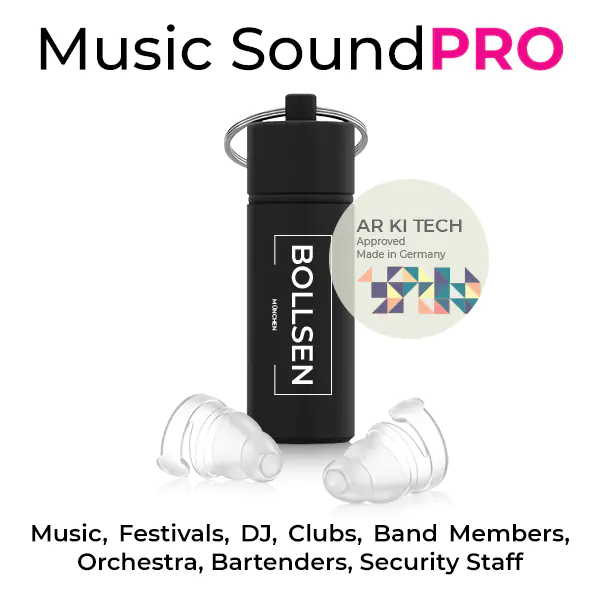
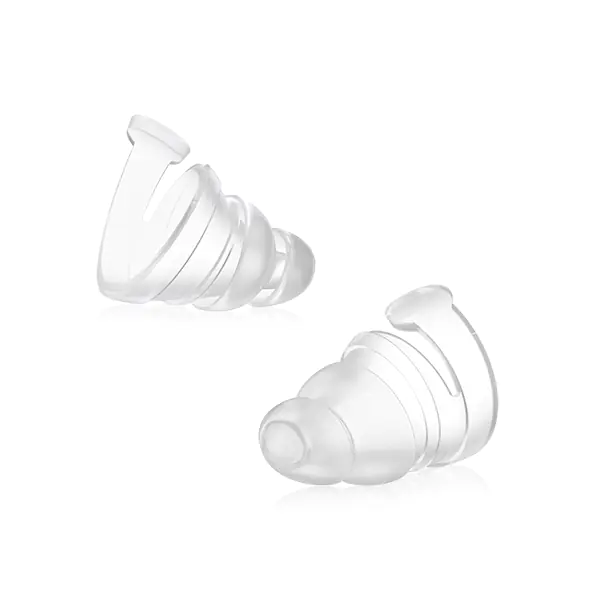
Choice overload adds stress of its own. Noise-sensitive concert-goers describe genuine anxiety over picking the right protection level for a gig, on top of the anxiety the gig already brings. That is why we make one concert earplug, the Music SoundPRO, with one honest certified number rather than a menu of modes.


How do you get through a loud concert with noise sensitivity?
Insert your earplugs before entering the venue, stand away from the PA stacks, find the quiet zone on arrival, schedule short ear breaks every 45–60 minutes, and agree an exit plan with your group so that leaving early is a decision, not a defeat.
The timing tip comes straight from concert-goers with sensitive ears. Humans perceive a sudden drop in volume as a drop in energy, so plugs inserted mid-set make the gig feel like it died. Put them in at the door and your brain calibrates once, then reads the whole show as normal.
A good seal decides how much of that SNR 24 dB you actually get, so practise inserting the lamella tip at home first. Our hub for earplugs for music covers seal depth, cleaning after sweaty venues, and wearing earplugs under in-ear monitors if you perform. If sizing is the worry, our AR KI TECH photo measurement finds your size before we ship.
Do venues have to help noise-sensitive concert-goers?
No UK law caps audience sound levels at concerts, but the WHO Global Standard for safe listening venues, published in 2022, asks venues to hold a 100 dB LAeq,15min average, monitor levels live, offer hearing protection to the audience, and provide designated quiet zones.
The WHO standard gives you a practical filter when booking. A venue holding a 100 dB average drops to roughly 76 dB behind SNR 24 dB earplugs, close to normal-conversation territory. Check the accessibility page before you buy, and email the box office about quiet spaces; sensory-friendly listings are growing across the UK.
The bottom line for noise-sensitive concert-goers
Concerts are not off the table because your ears are sensitive. Protect properly at the show, leave your ears open in daily life, and pick venues that respect the 100 dB standard. An SNR 24 dB passive earplug is the sweet spot for sensitive ears, enough reduction to make 110 dB manageable, light enough that the music and your friends stay with you.
If the next gig is already in your calendar, our transparent Music SoundPRO for noise-sensitive concert-goers reduces every show by a certified SNR 24 dB, and the 40-day money-back guarantee means the first concert is the test. Book the ticket. Your ears can come too.

His connection to hearing protection stems from personal experience with sound sensitivity during live events and work in noisy environments, an issue that made him more aware of the long-term risks of unmanaged noise exposure. Today, as both a communicator and a user of BOLLSEN products, he is passionate about raising awareness around the importance of proactive hearing care.
At BOLLSEN, he develops data-driven marketing campaigns, writes SEO-focused articles, and manages communication channels that connect customers with practical knowledge about hearing protection. His work ensures that BOLLSEN’s message—prioritizing health, performance, and sustainability reaches a global audience in an engaging and trustworthy way.
Passionate about writing since childhood, Timotej combines creativity with a strong analytical approach, continuously testing new ideas in digital marketing, performance advertising, and social media. He believes in learning through innovation and collaboration, balancing leadership with openness to new perspectives.
Beyond his professional role, Timotej is committed to a healthy lifestyle and finds inspiration in fitness, sports, and quality time with friends. His personal passion for well-being aligns with BOLLSEN’s core values, making his work not only a career but also a cause he deeply believes in.