
⏱️ Estimated reading time: 8 min

Key Takeaways
Foam earplugs are made of compressible materials such as polyurethane. They expand in the ear canal to limit exposure to high sound levels and are classified as single use items. They are frequently distributed in bulk for workplaces, events, or for occasional sleeping use. Their design and characteristics make them effective in some contexts, but they also come with limitations when compared to other earplug materials.
To place foam earplugs in context alongside other materials, see our overview of types of earplugs (silicone, foam, wax).
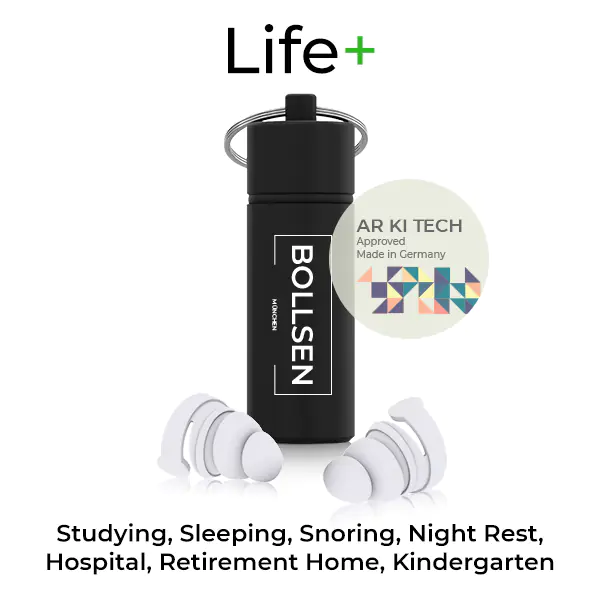
Foam earplugs are designed for single use. You can get away with reusing a pair a few times while they still expand fully and look clean, but foam soaks up earwax, sweat, and bacteria quickly, so it is best to replace them every couple of days rather than keep the same pair for weeks. If you want something to wear night after night, a washable silicone plug such as the Bollsen Life+ is the more hygienic choice, since it is built to be cleaned and reused up to 100 times.
What Are Foam Earplugs?
Foam earplugs are made of either polyurethane or PVC foam. They expand to create a seal after being compressed between the fingers and inserted into the ear canal. They provide higher sound reduction ratings than other common earplug materials. Most products carry a noise reduction rating between 28 and 33 decibels. They are classified as disposable products that should not be used repeatedly.
- Material: polyurethane or PVC foam.
- Noise reduction: usually 28 to 33 decibels.
- Lifespan: designed for single use.
Usage Scenarios
Foam earplugs are used in a variety of settings where sound exposure is frequent. They appear in occupational safety programs and are often included in bulk safety kits.
For Sleeping in Noisy Rooms
When background sounds exceed comfortable levels during rest, foam plugs can reduce disturbances. Comfort may vary for side sleepers. In many cases, earplugs for sleeping made from silicone offer a softer and reusable alternative.
For Industrial Work
In workplaces where machinery produces sound levels above 85 decibels, foam earplugs are issued in compliance with safety rules. Their single use nature ensures hygiene, although it requires constant replacement.
For Crowded or Loud Events
At concerts or festivals, foam plugs may be provided as low cost protection for attendees. Their ability to reduce sound intensity makes them practical in such temporary scenarios.
Limitations
Foam earplugs have several points that users should consider. They require careful insertion to achieve the rated protection. They lose effectiveness when reused and may cause dryness or pressure inside the canal. Their disposability creates waste and contributes to ongoing purchase needs.
- Comfort: less consistent for long hours of use.
- Longevity: intended for single use.
- Environmental impact: non recyclable, contributing to disposable waste.The RNID guide to hearing loss and earplug effectiveness notes that correct fit is the most critical factor in earplug performance, foam earplugs’ fit quality varies more between insertions than pre-formed silicone alternatives, meaning real-world attenuation can fall below the rated SNR.
Foam vs. Other Earplug Materials
When compared with alternatives, foam earplugs are not reusable. They outperform other types only in terms of noise reduction. Silicone earplugs offer comfort and washability, making them more sustainable. Wax earplugs offer mouldability to the ear opening but soften in heat, which limits reliability.
For a reusable alternative designed for comfort, see our guide to silicone earplugs.
For users interested in natural mouldable options, read about wax earplugs.
The Sleep Foundation guidance on earplugs for sleeping places foam earplugs in the entry-level category for sleep use, noting they are most suitable for occasional use or travel but that reusable silicone options outperform them for consistent nightly wear.
Safety and Proper Use
Foam earplugs must be compressed before placement. They expand within the ear canal to create a seal. They should be discarded after each use to reduce the risk of bacteria. Incorrect insertion reduces the effective noise reduction.
- Insertion technique: roll between fingers, place in ear, hold until expansion.
- Certification: many products tested under EN 352 or ANSI standards.
Selecting Foam Earplugs
Choice of foam earplugs depends on the required level of sound reduction and fit. Bulk packaging lowers the price per pair. Different foam densities affect comfort and may be better suited to different ear shapes.
Checklist for choosing foam earplugs:
- Noise reduction rating.
- Fit in the canal.
- Disposable versus limited reuse.
- Size of packaging.


Conclusion
Foam earplugs provide short term protection in loud environments. They are intended for single use and frequent replacement. They remain common in workplaces and events, but for ongoing comfort, reusability, and sustainability, silicone earplugs are often chosen.
To compare foam with silicone and wax, see types of earplugs (silicone, foam, wax). For sleep specific guidance, explore earplugs for sleeping.

His connection to hearing protection stems from personal experience with sound sensitivity during live events and work in noisy environments, an issue that made him more aware of the long-term risks of unmanaged noise exposure. Today, as both a communicator and a user of BOLLSEN products, he is passionate about raising awareness around the importance of proactive hearing care.
At BOLLSEN, he develops data-driven marketing campaigns, writes SEO-focused articles, and manages communication channels that connect customers with practical knowledge about hearing protection. His work ensures that BOLLSEN’s message—prioritizing health, performance, and sustainability reaches a global audience in an engaging and trustworthy way.
Passionate about writing since childhood, Timotej combines creativity with a strong analytical approach, continuously testing new ideas in digital marketing, performance advertising, and social media. He believes in learning through innovation and collaboration, balancing leadership with openness to new perspectives.
Beyond his professional role, Timotej is committed to a healthy lifestyle and finds inspiration in fitness, sports, and quality time with friends. His personal passion for well-being aligns with BOLLSEN’s core values, making his work not only a career but also a cause he deeply believes in.
Comments are closed.