
⏱️ Estimated reading time: 15 min

Key Takeaways
Fatigue directly lowers your noise tolerance threshold. The later it gets, the louder everything seems. A Chinese adults study (PMC8017893) found that bedroom noise averaging just 51 dBA was significantly associated with nonrestorative sleep, well above the WHO-recommended maximum of 30–40 dBA for bedrooms.
Wearing earplugs continuously during the day worsens sensitivity by an average of 7 dB (Formby, 2003). The auditory cortex compensates by amplifying its own signals, a process called central gain. Wearing filtered earplugs specifically for sleep in a moderate-noise environment is within NHS clinical guidelines and does not carry this risk.
Hyperacusis is a medical condition where everyday sounds are perceived as excessively loud; it affects 8–15% of adults. Misophonia is a trigger-specific emotional and physiological reaction to particular sounds such as chewing or breathing. General noise sensitivity is the broader umbrella, affecting an estimated 20–40% of the population to some degree, and does not require a formal diagnosis.
The NHS advises against wearing earplugs all the time, because constant overprotection lowers sound tolerance. Using filtered earplugs for sleep in a noisy bedroom (not a quiet one) is appropriate short-term use and does not meet the threshold for overprotection. If noise sensitivity is severe or worsening, consult an audiologist.
Filtered silicone earplugs with a 24 dB SNR rating are appropriate for noise-sensitive sleepers: they reduce triggering frequencies (traffic, snoring, environmental hum) without creating full auditory isolation, which would worsen sensitivity over time. Foam earplugs with high attenuation ratings are not recommended for noise-sensitive people sleeping in moderate environments.
This is a clinically documented feedback loop. A 2026 study (PMC12063956) found that sleep problems mediated 38.89% of the relationship between noise sensitivity and mental health outcomes. Poor sleep lowers auditory tolerance, which makes the next night harder, which deepens the sleep deficit. Breaking the cycle at the sleep stage is the most accessible intervention.
If you have noise sensitivity and struggle to sleep, you are almost certainly caught in a cycle that most sleep articles never acknowledge. A 2026 study in PubMed Central (PMC12063956) found that sleep problems mediate 38.89% of the relationship between noise sensitivity and mental health outcomes. The noise is not just an annoyance; it is actively undermining your wellbeing through the sleep it takes from you. Noise sensitivity affects an estimated 20–40% of the general population to some degree, yet the advice online ranges from “try white noise” to product roundups that miss the clinical nuance almost entirely.
People on noise-sensitivity forums describe anticipating noise before it even happens. The pre-sleep anxiety becomes as disruptive as the sound itself. At Bollsen Hearing Protection, trusted by 1,000,000+ people and stocked in the BBC Science Focus recommended list, we have spent years working out where earplugs help and where they do not. This guide works through the science, clears up the clinical nuance that gets misrepresented online, and gives you practical steps to sleep better without making your sensitivity worse.
What Actually Is Noise Sensitivity, and Why Does It Get Worse at Night?
Noise sensitivity is not a single condition. It covers at least three distinct neurological states, and knowing which one applies to you matters for how you manage sleep. Hyperacusis is the medical term for reduced sound tolerance: everyday sounds are perceived as excessively or painfully loud. A 2021 scoping review in Frontiers in Neurology (PMC8446270) found hyperacusis affects 0.2–17.2% of the general population, rising to 15.0% in adults aged 51–79 and occurring in 18–63% of individuals with autism spectrum disorder.
Misophonia is different: a trigger-specific emotional and physiological reaction (fight-or-flight activation) in response to particular sounds such as chewing, breathing, or repetitive tapping. Phonophobia is a fear of specific sounds without the hypersensitivity of hyperacusis. General noise sensitivity sits across all three and affects an estimated 20–40% of adults to some degree without meeting the threshold for any formal diagnosis.
The reason it worsens at night is physiological, not imaginary. Fatigue lowers your auditory processing threshold, meaning your brain is literally less equipped to filter irrelevant sound when you are tired. As one audiologist quoted in a community forum put it: “Your body will have a harder time with auditory processing when stressed or tired.” The same sounds you filter out at noon become intolerable at midnight. If they then disrupt your sleep, you wake up more fatigued and the cycle repeats. Users on noise-sensitivity forums describe this escalation vividly: “sounds keep bothering me more and more” as the evening wears on.
How Does Nighttime Noise Disrupt Sleep for Sensitive People?
Environmental noise at night does not just wake you up. It suppresses the most restorative stages of sleep even when you stay technically asleep. Research cited by the Sleep Foundation shows that nighttime noise increases time spent in light stage 1 sleep while measurably reducing both slow-wave sleep and REM sleep, the stages responsible for physical repair and memory consolidation. Noise also triggers cortisol and adrenaline release, keeping the sympathetic nervous system partially active when it should be fully switched off.
For noise-sensitive people this mechanism is amplified. A study of Chinese adults (PMC8017893) found that a one-unit increase in noise sensitivity score was associated with a 0.08 increase in nonrestorative sleep perception (p=0.023, n=500). The same study recorded bedroom noise averaging 51.32 dBA, above the WHO-recommended ceiling of 30–40 dBA for bedrooms. Nonrestorative sleep (sleep that fails to restore despite adequate duration) is a distinct entity from insomnia, and it is what noise-sensitive people most frequently report.
Understanding how noise disrupts your sleep architecture at the neurological level gives you more useful options than simply hoping for a quieter bedroom, because the disruption happens well below the volume threshold for waking up.
The Sleep Foundation data on noise and sleep disruption found that approximately 60% of adults report noise affecting their sleep at least some of the time, a figure substantially higher among those with clinically elevated noise sensitivity.
Is There a Feedback Loop Between Poor Sleep and Noise Sensitivity?
Poor sleep and noise sensitivity reinforce each other. Noise sensitivity disrupts sleep; impaired sleep worsens noise sensitivity the next day. The 2026 PMC12063956 study confirmed this statistically: sleep problems positively predicted noise sensitivity outcomes (P=0.011) and accounted for nearly 39% of the pathway through which noise sensitivity harms mental health.
The neurological mechanism here is central gain: when the auditory cortex is deprived of adequate sound input (through quiet environments or overuse of hearing protection), it compensates by amplifying its own baseline signals. This makes the system more reactive, not less. Sleep deprivation has the same effect on auditory processing, lowering the filter threshold so background sounds that would normally be ignored break through into conscious awareness.

Breaking this loop means targeting the sleep side directly. You cannot easily retrain your auditory cortex overnight, but you can take practical steps to reduce the nighttime noise triggering the cycle. Whether earplugs are the right tool for that depends entirely on how you use them.
What Does the NHS Say About Earplugs and Noise Sensitivity?
The NHS guidance on hyperacusis is direct: “do not wear earplugs or muffs all the time”, because constant overprotection reduces sound tolerance by reinforcing the central gain mechanism. Research by Formby (2003) put a number on this: continuous earplug use reduced sound tolerance by an average of 7 dB, which largely reverses within 24 hours to one week after normal sound exposure resumes.
What the NHS guidance does not prohibit is targeted, time-limited earplug use in genuinely loud or triggering environments. Sleeping in a bedroom where a partner snores at 60–80 dB, or where road noise exceeds the WHO-recommended 30–40 dBA limit, is exactly that scenario. The earplug is not a daytime retreat from sound. It is being used in a specific window where noise is genuinely above the threshold for restorative sleep.
Forum users who have fallen into what audiologists call “overprotection creep” describe wearing protection everywhere: “I’m basically protecting everywhere but in my house now.” That pattern (worn all day, in quiet offices, in normal conversations) is what the NHS warning addresses. Many noise-sensitive people read the guidance and conclude earplugs are off-limits entirely. That is not what it says.
Which Earplugs Are Appropriate for Noise-Sensitive Sleepers?
For noise-sensitive sleepers, the earplug specification matters as much as the act of wearing them. A filtered silicone earplug rated at 24 dB SNR attenuates the triggering frequencies (traffic rumble, snoring, environmental hum) while preserving higher frequencies including alarms, voices, and safety signals. That is not full auditory isolation, which is precisely the point. Full isolation from foam earplugs rated above 35 dB SNR risks driving central gain further, which is the last thing a noise-sensitive person needs.
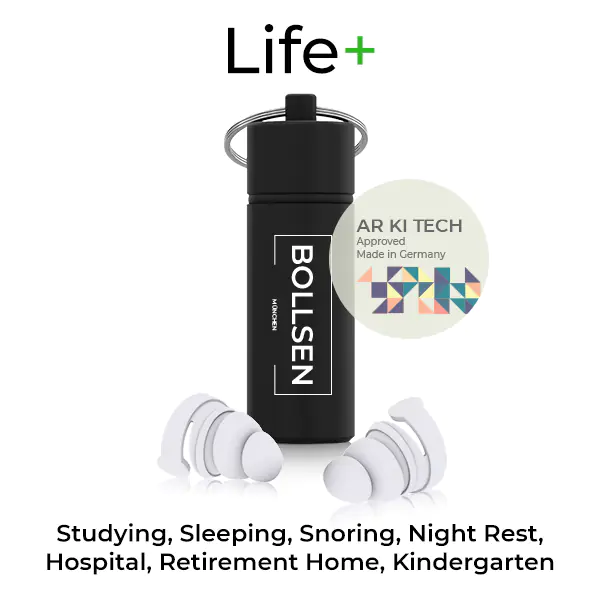
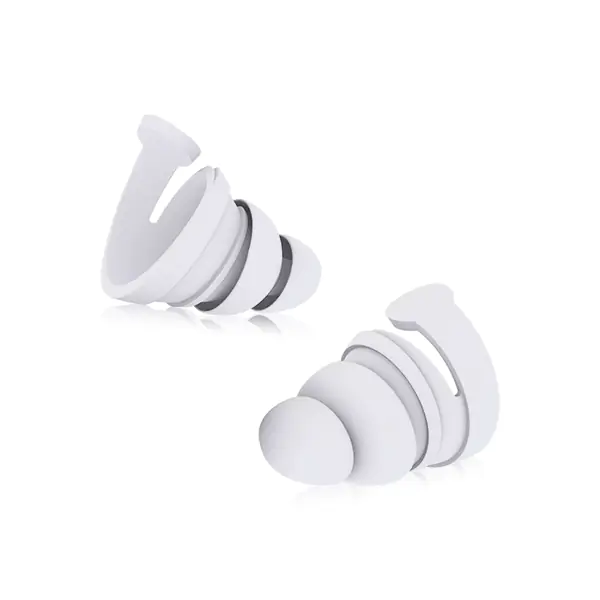
At Bollsen, our Life+ earplugs use a patented conical two-lamellae design in 100% medical-grade silicone, independently certified at 24 dB SNR by German testing laboratories. They are reusable up to 100 times and sit completely flush in the ear, which matters for side sleepers who would feel a protruding foam plug against the pillow. Over 10,000 verified reviews and a 40-day money-back guarantee mean you can test them in your own bedroom without risk.


Best earplugs for sleeping by SNR for noise-sensitive use shows how the 24 dB specification sits relative to the full available range. That rating is established in NRR and SNR attenuation threshold for noise-sensitive sleepers, sufficient to reduce sharp triggers without crossing into the over-isolation that amplifies central gain long-term. Acoustic leakage around a poorly sealed standard earplug reduces effective attenuation by 5-10 dB, and AR KI TECH canal measurement and seal attenuation for noise-sensitive ears closes that gap where standard sizing consistently underperforms.
The WHO Environmental Noise Guidelines recommend indoor bedroom noise levels below 30 dB for undisturbed sleep, a threshold that noise-sensitive individuals often find insufficient without additional attenuation from earplugs.
Does the Type of Noise Sensitivity You Have Change What You Should Do?
| Condition | Prevalence | Sleep trigger | Earplug appropriate for sleep? |
|---|---|---|---|
| Hyperacusis | 8–15% of adults | Any sound above individual threshold perceived as painful/excessively loud | Yes, low-attenuation filtered earplugs (24 dB SNR) for sleep only. NHS recommends sound therapy + CBT as primary treatment. |
| Misophonia | 10–15% of adults (US); 49.1% of UK medical students | Specific sounds (snoring, breathing, repetitive tapping) trigger fight-or-flight, blocking sleep onset | Yes, filtered earplugs attenuate trigger sounds at night. Daytime use not recommended. |
| General noise sensitivity | 20–40% of population | Environmental noise above WHO 30–40 dBA bedroom threshold disrupts sleep stages | Yes, standard sleeping earplugs appropriate when bedroom noise exceeds recommended levels. |
| Phonophobia | Less studied; often co-occurs with hyperacusis | Anticipatory anxiety about potential sounds disrupts sleep onset before any noise occurs | Caution, earplugs may help acute episodes but can reinforce avoidance behaviour. Discuss with audiologist. |
If your primary issue is misophonia (particularly if it is triggered by a partner’s snoring or breathing at night), there is a dedicated guide on misophonia and sleep that covers the specific mechanisms and strategies in more depth. This article focuses on hyperacusis and general noise sensitivity, where the earplug question carries the most clinical nuance.
How Can You Sleep Better With Noise Sensitivity Tonight?
The most effective approach combines passive sound reduction at bedtime with daytime habits that keep the central gain mechanism in check. Filtered earplugs for sleep address the acute night-by-night disruption, but they work best alongside gradual sound exposure during waking hours. Not silence (silence accelerates central gain), but normal everyday sound without deliberate amplification or over-attenuation.
Sound therapy is the standard NHS clinical recommendation for hyperacusis: typically pink noise, birdsong, or low-level environmental recordings played just below the discomfort threshold, for 20–30 minutes per session, gradually increasing tolerance over weeks. CBT is often combined with sound therapy to address the anticipatory anxiety that forum users describe as “sometimes worse than the noise itself.”
Knowing your specific sensitivity profile also helps you choose the right earplug specification. People considering earplugs for noise sensitivity should look for filtered, low-to-moderate attenuation products designed for sleep. Industrial hearing protection is built for very different exposure scenarios and will block far more sound than is appropriate for a bedroom.
Before assuming earplugs are the answer, check whether your bedroom noise is actually above the WHO threshold. A free phone app measuring ambient dBA during the night can tell you whether you are dealing with a noise problem or a sensitivity problem. The interventions differ. If noise is the primary issue, earplugs work well. If the bedroom is genuinely quiet and you are still hyperreactive to sound, that points toward the clinical route of sound therapy and CBT.
Is It Safe to Wear Earplugs Every Night if You Have Noise Sensitivity?
Nightly earplug use for sleep is broadly considered safe when the bedroom environment is genuinely noisy: a snoring partner, road traffic above 40 dBA, neighbours, or an industrial neighbourhood. Whether it is safe to wear earplugs every night depends on what you are filtering, not just the fact of wearing them.
The risk accumulates with overprotection: using earplugs in quiet environments, wearing them during the day at work, reaching for them whenever any sound occurs. That pattern trains the auditory system to become hypersensitive to sound in their absence. Used only at night, in a genuinely noisy bedroom, filtered earplugs rated at 24 dB SNR sit well within what audiologists consider appropriate contextual use. They do not eliminate all sound. They reduce the sharpest triggers to a level your nervous system can sleep through without triggering the cortisol response.
If you find yourself unable to sleep without them in completely quiet environments, or needing higher and higher attenuation to achieve the same effect, those are signals to consult an audiologist rather than continuing to self-manage.
The RNID guide to safe noise exposure confirms that repeated exposure above 85 dB causes permanent hearing damage, and that correctly fitted hearing protection, including sleep earplugs, is a clinically recommended protective measure.
Conclusion
Noise sensitivity and sleep disruption form a feedback loop that worsens with each poor night. Fatigue lowers your auditory threshold, making sound more intrusive, which disrupts the next night’s sleep, and so on. The evidence is clear: sleep problems account for nearly 39% of the pathway between noise sensitivity and reduced wellbeing.
The earplug question has a practical answer. Filtered earplugs rated at 24 dB SNR, worn for sleep in a genuinely noisy bedroom, are appropriate and do not carry the overprotection risk of continuous daytime use. They reduce the most triggering frequencies without creating auditory isolation, giving the nervous system what it needs to move into the deeper sleep stages that sensitivity has been disrupting. For a broader look at how protection choices interact with sleep quality, the earplugs for sleeping hub covers all the options. If you are ready to try, Bollsen Life+ comes with a 40-day money-back guarantee. Test them in your own bedroom and judge by how you wake up.

His connection to hearing protection stems from personal experience with sound sensitivity during live events and work in noisy environments, an issue that made him more aware of the long-term risks of unmanaged noise exposure. Today, as both a communicator and a user of BOLLSEN products, he is passionate about raising awareness around the importance of proactive hearing care.
At BOLLSEN, he develops data-driven marketing campaigns, writes SEO-focused articles, and manages communication channels that connect customers with practical knowledge about hearing protection. His work ensures that BOLLSEN’s message—prioritizing health, performance, and sustainability reaches a global audience in an engaging and trustworthy way.
Passionate about writing since childhood, Timotej combines creativity with a strong analytical approach, continuously testing new ideas in digital marketing, performance advertising, and social media. He believes in learning through innovation and collaboration, balancing leadership with openness to new perspectives.
Beyond his professional role, Timotej is committed to a healthy lifestyle and finds inspiration in fitness, sports, and quality time with friends. His personal passion for well-being aligns with BOLLSEN’s core values, making his work not only a career but also a cause he deeply believes in.