
⏱️ Estimated reading time: 13 min
Summarize with AI

⏱️ Estimated reading time: 13 min
SNR and NRR are two systems for rating how many decibels of noise an earplug blocks, and the main difference between them is geographic. NRR (Noise Reduction Rating) is the standard printed on earplugs in the United States, while SNR (Single Number Rating) is the European equivalent. They are measured slightly differently, so for the same earplug the SNR figure usually reads about 2 to 3 dB higher than the NRR. Neither number guarantees real-world silence, what matters most for sleep is how well the plug seals in your ear.
Not all earplugs are created equal and neither are the noise ratings printed on their packaging.
If you’re trying to sleep through a snoring partner or street traffic, understanding the difference between NRR and SNR can help you choose the right level of silence.
Many people search online for terms like “SNR vs NRR” or “what is a good SNR value” because they’re confused by the technical language. Most of the existing content explains formulas and lab tests but rarely translates ratings into real-world sleep contexts.
Below, we define NRR and SNR, show how the U.S. and EU standards differ, and translate the numbers into what they mean for sleeping through snoring, traffic, or light disturbances.
By the end, you’ll know how to read the numbers on packaging and match them to your sleep environment, so you can pick earplugs that balance comfort and effectiveness.
When you look at a box of earplugs, you’ll often see a number printed in decibels (dB). This number is supposed to tell you how much noise the earplugs can block. That number comes from two different systems: NRR and SNR.
NRR (Noise Reduction Rating) is the system used in the United States. It was created by ANSI (American National Standards Institute) and is required on hearing protection sold in the U.S. NRR values are based on lab tests where volunteers wear earplugs in controlled conditions, and sound reduction is measured across different frequencies.
SNR (Single Number Rating) is the European equivalent. It comes from the EN 352 testing standard. Like NRR, it uses lab conditions, but the formula is slightly different and tends to produce slightly higher numbers for the same product. The EN 352 standard is a European regulation that sets requirements for hearing protection devices, including how they are tested, labeled, and certified for safety and performance.
Both systems are useful, but they are not exact predictors of how quiet your room will become when you use earplugs. Instead, they are starting points that give you a rough idea of how much noise reduction is possible.
For sleepers, this matters because the sounds you want to block like snoring, traffic, or noisy neighbors don’t match a quiet lab. If you expect total silence, you may be disappointed. But if you know how to read the ratings, you can set realistic expectations and pick the right earplugs for your needs.
NRR (Noise Reduction Rating) stands for the number you’ll find on products sold in the U.S. It tells you how many decibels of noise might be blocked under perfect laboratory conditions. In other words, it’s a guide to how strong the earplugs could be when tested in a quiet, controlled setting.
SNR (Single Number Rating) is the European version of this rating. It’s also based on lab testing but uses a different calculation method. Because of that formula, SNR values are often a little higher than NRR for the same product. This doesn’t mean they work better it just means the two systems measure things differently.
These ratings are not interchangeable, and you can’t convert one directly into the other. Think of them as two rulers from different countries: both measure length, but in different units. The important part is to read the one that matches where the product is certified and use it as a starting point for comparing earplugs.
When choosing earplugs, it helps to know that NRR is required in the United States while SNR is required across the European Union. These regional rules explain why packaging looks different depending on where the product is sold. Some global brands print both values so that buyers can compare easily, no matter where they live. That’s why it helps to know where to find certified sleep earplugs and how CE and NRR certifications work, so you can be confident the rating on the box reflects proper testing and safety standards.
For sleepers, paying attention to the label helps avoid confusion. If you’re in the U.S., focus on the NRR. If you’re in Europe, read the SNR. If you see both, use the rating that matches your region’s rules, and remember that certification matters.
Lab numbers are helpful, but they don’t always match real life. In practice, earplugs block less sound than the rating on the package suggests. Experts call this derating. For example, a plug with an NRR of 33 dB might only cut about 20 dB when used at home. That’s still a big drop in noise, but it isn’t total silence.
The reason is that ratings come from perfect lab conditions. At home, earplugs can be inserted too loosely, or your ear canal shape may reduce the seal. Foam plugs in particular underperform if not rolled and fitted correctly.
It also helps to compare the numbers to everyday sounds. A snoring partner can reach 60–70 dB, while an air conditioner hum is closer to 50 dB. Cutting 20 dB off those sounds makes a real difference, but you’ll still hear something in the background. Understanding this helps set realistic expectations: earplugs reduce noise, but they don’t erase it completely.
The HSE Control of Noise at Work Regulations set 85 dB(A) as the threshold at which hearing protection becomes legally required in UK workplaces, the same decibel level that informs the noise rating you need for your sleeping environment.
Not every sleep situation needs the same level of noise protection and in fact, for most sleepers, very high ratings aren’t necessary. What matters most is matching your earplugs to the types of noise you want to block and choosing a design you can actually sleep in comfortably.
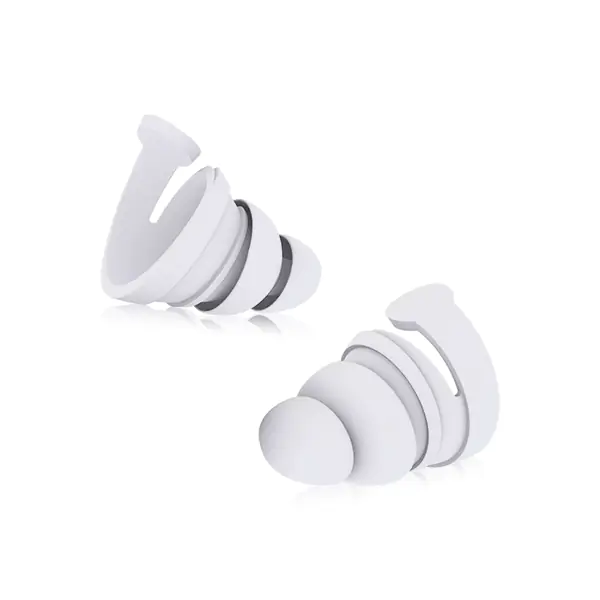
For example, light talking or a fan is around 40–50 dB. In these cases, a reduction of about 22–25 dB, like what our medical-grade silicone earplugs provide, is often more than enough for uninterrupted rest. Even with snoring that can reach 60–70 dB, cutting the noise by around 24 dB takes the edge off and makes it far easier to fall and stay asleep.
It’s also worth remembering that attenuation is only one part of good sleep. Comfort, fit, and reusability all matter just as much. By combining reliable noise reduction with benefits like hypoallergenic silicone and a design that suits sensitive ears, you get a solution that balances quiet with comfort.
In short, you don’t need the highest numbers on the box to get real results. For most sleepers, a safe and comfortable 24 dB reduction is exactly the level that improves sleep without over-isolating you from your environment.
Earplugs rated above 30 dB SNR reduce ambient sound below speech level, which causes disorientation on waking. Best earplugs for side sleepers in the moderate SNR range sit at 24-27 dB for this reason. The same ceiling applies to sleeping next to a snoring partner, where the 24-27 dB range performs better than industrial-grade protection.
The WHO Environmental Noise Guidelines recommend indoor bedroom noise levels below 30 dB for undisturbed sleep, the target figure from which you can calculate the SNR rating needed based on your room’s ambient noise level.
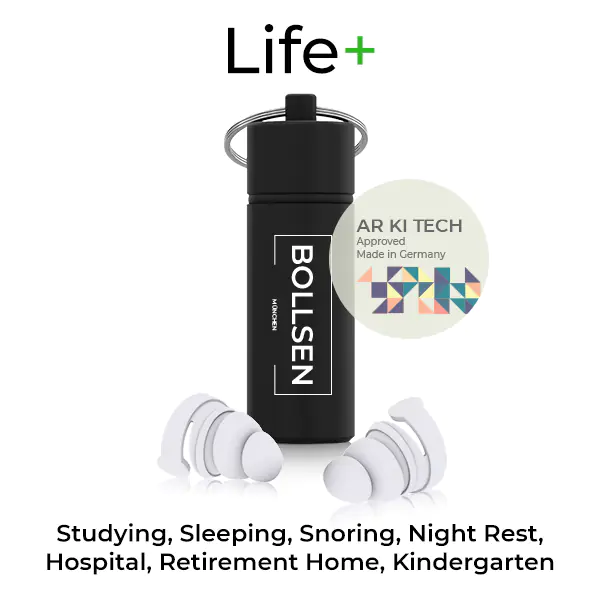
For most sleepers a mid-range rating is the sweet spot. The Bollsen Life+ is rated 24 dB SNR, enough to soften snoring and traffic while the soft silicone stays comfortable for nightly, side-sleeping use.
Earplugs come in different materials and styles, and each type has its own typical SNR noise reduction range. Knowing these ranges can help you compare options and choose what fits both your comfort needs and your sleep environment.
| Earplug Type | Typical SNR Range | Comfort & Fit Notes | Reusability / Cost Considerations |
|---|---|---|---|
| Foam | 30–33 dB | Expands fully in ear canal; can feel bulky for side sleepers | Inexpensive, usually disposable |
| Silicone | 24–27 dB | Soft, flexible, good for sensitive ears and side sleeping | Reusable, durable, mid-range cost |
| Wax | 22–25 dB | Molds gently to ear, very comfortable | Reusable a few times, slightly higher cost than foam |
| Filtered/Vented | 15–25 dB | Reduces noise evenly across frequencies; maintains awareness | Reusable, higher cost, balanced protection |
Noise ratings like NRR and SNR are helpful, but they don’t tell the whole story. In practice, the best earplug is the one that fits your ear properly, feels comfortable through the night, and reduces just enough noise to keep you asleep.
Here are some closing tips:
In short, think of NRR and SNR as guides, not guarantees. Focus on overall comfort, proper fit, and enough quiet to help you rest – without cutting yourself off from the world entirely.
The RNID guidance on safe decibel exposure notes that sound intensity doubles with every 3 dB increase, which explains why even a small difference in SNR rating can translate to a meaningful real-world difference in how much noise reaches the ear during sleep.
Choosing the right attenuation level varies by sleep scenario. Best earplugs for sleeping selected by SNR rating addresses the general case. dB thresholds for circadian rhythm protection during sleep covers the specific noise levels that disrupt sleep cycles. Best earplugs for snoring by SNR rating deals with the 55-65 dB partner noise range.Our guide on how dB thresholds translate to circadian rhythm protection during sleep explores this further.
See our guide to which SNR rating is needed to block snoring noise effectively for a practical comparison.


Comments are closed.